
The SeaDoc Society is a program of the Wildlife Health Center at the UC Davis School of Veterinary Medicine. Tax ID# 94-6036494.

Share this page with friends:

Grab with

Lockerz Grab It

SeaDoc Blog


Unraveling the Mystery of Stranded Whales

killer whale

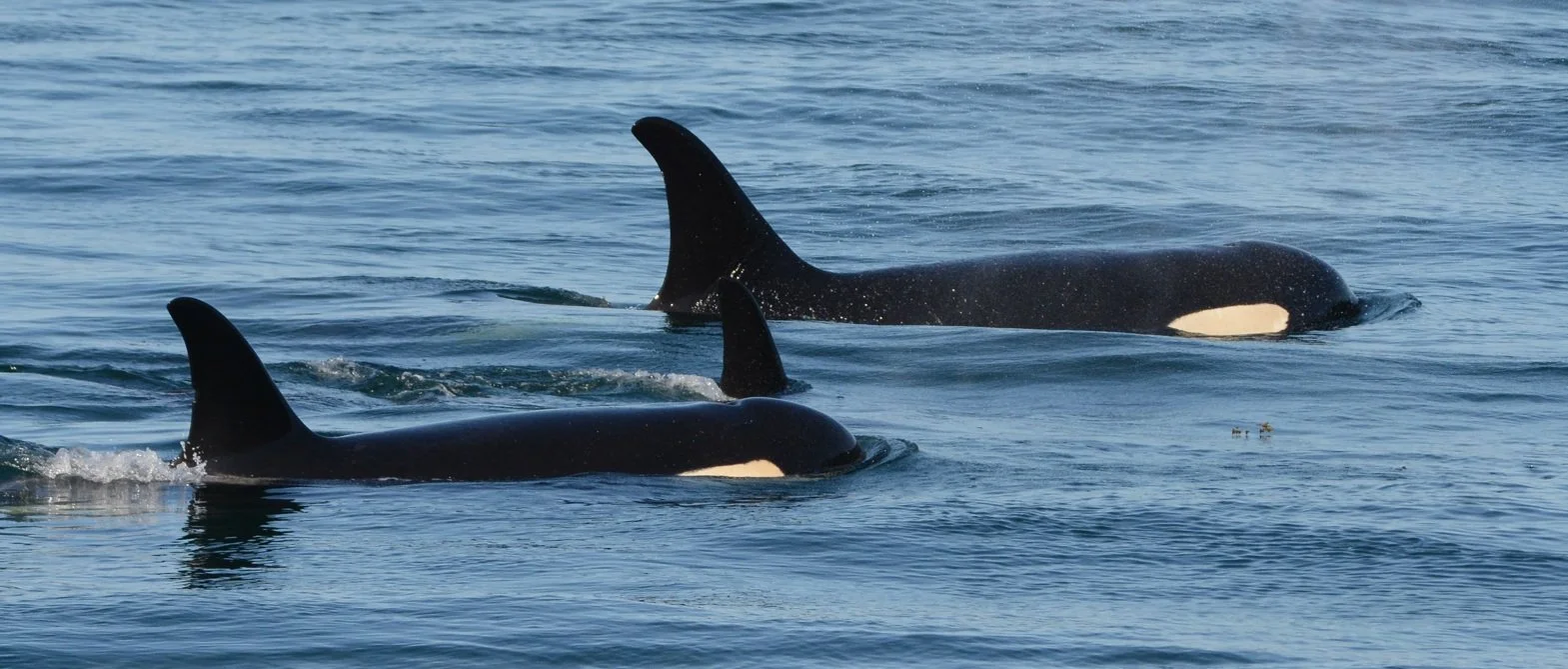
Killer whale strandings are always bad news. However, a new paper by SeaDoc scientists and collaborators shows that each orca’s death also is an opportunity to improve our understanding of the species and aid in the recovery of endangered populations.

This first-of-its-kind study analyzed live and dead killer whale strandings in the North Pacific Ocean dating back to 1925. It showed that very few orcas that die wash ashore – just 10 per year over the entire North Pacific Ocean. While each rare stranding is a chance to gather a huge amount of data, until recently less than 1 out of every 50 dead killer whales was thoroughly examined.

That changed in 2004 when SeaDoc’s Joe Gaydos and Stephen Raverty, a veterinary pathologist from British Columbia, created a killer whale necropsy protocol that helped stranding responders maximize the amount of information learned from each orca carcass. Thanks to this and dedicated funding from NOAA to analyze samples, since 2004 scientists have performed necropsies on 1 out of every 3 killer whales that strand in the North Pacific – a remarkable 1600% increase in effort. The data collected – on causes of death, contaminants, and genetics -are already being used to help recover endangered killer whale populations.

The scientific citation: 

Barbieri, Michelle M., S. Raverty, M.B. Hanson, S. Venn-Watson, J.K.B. Ford, J.K. Gaydos. 2013. Spatial and temporal analysis of killer whale (Orcinus orca) strandings in the North Pacific Ocean and the benefits of a coordinated stranding response protocol. Marine Mammal Science, DOI 10.1111/mms.12044

Download the full manuscript.

stranded killer whale

For those who want to get more detail on the study without reading the full manuscript, here's a slightly longer summary: 

Efforts to learn more from stranded killer whales are working

In a first-of-its-kind study published last week in the journal Marine Mammal Science, researchers analyzed North Pacific killer whale strandings dating back to 1925.

“This was a herculean effort to learn more about one of the ocean’s top predators,” says lead author Michelle Barbieri, a former SeaDoc scientist and currently the lead veterinarian for the Hawaiian Monk Seal Research Program. “We could not have done this without the collaboration of dozens of killer whale scientists from around the world who provided stranding and population data from Washington State, Oregon, California, Alaska, Hawaii, British Columbia, Mexico, Japan and Russia.

The final report noted that while orcas are some of the most widely distributed whales on earth, very few dead ones are ever found. Over the last two decades, an average of just 10 a year have been discovered stranded across the entire North Pacific Ocean. The study determined that 88% of all reported killer whale strandings are fatal while only 12% make it off the beach alive. It’s those dead whales, though, that can provide critical clues to the species’ overall life history, genetics, health and causes of mortality. With such limited opportunity to do comprehensive sampling and studies, the study’s authors noted the disturbing fact that, until recently, less than 2% of those dead killer whales were thoroughly examined.

“Each stranded orca should be viewed as a unique opportunity to enhance our understanding of this magnificent species,” says co-author and veterinary pathologist Stephen Raverty. To maximize the science gathered from each stranding, Raverty and Joe Gaydos, SeaDoc Director and another of the paper’s co-authors, created a standardized killer whale necropsy protocol in 2004. The analysis of strandings since then has shown that the protocol -- along with funding from the US National Marine Fisheries Service and Canadian Department of Fisheries and Oceans dedicated to southern resident killer whale recovery – has boosted the collection of complete data from killer whale strandings. Where traditionally only one in fifty would be analyzed, one in three now get a full work-up.

While this new study was designed to look at stranding trends and did not evaluate the causes, necropsies on beached orcas have shown that they absorb extremely high loads of manmade toxins, suffer from infectious diseases, and in the case of fish-eating populations, depend primarily on severely depleted salmon stocks. With the standardized protocol now in place providing much more complete data on strandings, researchers are getting a clearer picture of killer whale life and death.

“As apex predators and flagship conservation species, killer whale strandings are sad events,” says Gaydos, “but this paper confirms that if we make every effort to understand why the stranding occurred, we will ultimately improve the fate of the species.”

June 2013 Update

Stuart Island geology

stuart

locator mapThe point of a map is to help us get where we're trying to go. In this case, knowing the underwater geography of a place can help us choose where to focus our investigations and conservation efforts.

For example, this map helps us identify good habitat for rockfish, one of the major conservation targets in the Salish Sea. Several rockfish species are protected under the US Endangered Species Act. All species are closed to fishing on the US side. British Columbia has set up 164 Rockfish Conservation Areas where no hook and line fishing is allowed.

But one of the biggest things this map shows is that we have more work to do. The shallow areas around Stuart and Johns Islands have not been mapped. (Shallow-water work involves a different boat and greater caution than the deep-water mapping.) We expect to find more rough rocky habitat around the edges and more even sediments in the embayments, but we won't really know what's there until we map it.

What else to see on this map:

1. Numerous faults slash through the area. Visible on this map are fault scarps running approximately NW to SE along the top of Stuart and Johns Islands. Two scarp locations are marked on the map and are probably part of the same fault, but they only show up on the bathymetry in these two places. There’s another scarp near the 8 on the distance scale at the bottom of the image, and yet another striking in a WNW direction from the bottom right of the map.

As if that wasn’t evidence enough of past tectonic activity, there’s also the 3.9 earthquake that happened on December 26, 2013. The epicenter of this quake is shown on the map, though it was several kilometers down and there’s no visible fault seen in the bathymetry.

2. Evidence of past glaciers includes two possible moraines where the retreating glaciers might have paused. The Haro Strait / Boundary Pass channel is a glacial fjord carved by glaciers moving down from the north. We can see two places that might be remnants of moraines where the glaciers paused in their retreat or melting episode and dumped a load of sediment concentrated along their leading edge. The southwest one is fairly small, but the one between South Pender Island and Stuart Island is much longer and more substantial in character.

dfo currents3. Scouring from strong currents. If you’re water heading north or south through this area, chances are you race through Haro Strait and Boundary Pass.  All this water force has scoured out the bottom of the channel. You can even see a circular depression NW of Turn Point where turbulence has created a scour hole. Between the scour hole and Turn Point, look for the rugged projection of the island underwater. This is a tough chunk of sedimentary rock that withstood the glacier and continues to hold its own against the currents.

In another view on this same map, below, you can see different potential habitat types identified. Typical rockfish habitat is marked with dotted horizontal lines. The areas with wavy lines are “dynamic bedforms” consisting of sand, and are likely good habitat for sand lance, an important forage fish species.

stuart habitat

Maps by G. Greene & J. Aschoff. 

Hide and seek seabirds: How to estimate colony size for burrow-nesting seabirds

rhinoseros auklet

Marine birds are important sentinel species for ecological conditions and to track them, scientists often count the birds at the breeding colonies, which tells us the number of adults trying to breed. 

But for seabirds that nest in burrows like Rhinoceros Auklets and Tufted Puffins, it’s hard to know how big the colony is because the birds, eggs, and chicks can be 15 feet down underground. 

A recently-published SeaDoc-supported paper recommends ways to improve monitoring of burrow-nesting seabirds. Lead author Scott Pearson and others used Rhonoceros Auklet breeding colony count data for the last 40 years to evaluate ecosystem changes and to address how scientists can best estimate colony size for burrow-nesting seabirds. 

(If Scott Pearson’s name is familiar, it’s because he worked with Joe Gaydos on our landmark list of birds and mammals of the Salish Sea.)

The goal of the study was to develop a precise and repeatable method so that population trends for burrow-nesting seabirds could be tracked. Historically, researchers have used different statistical tools and sampling methods over time to monitor burrow-nesting seabirds, which makes data sets hard to compare to each other. 

The paper contained two items we think are of particular interest to non-scientists. The first was that contrary to expectations, the population of Rhinoceros Auklets is increasing at two locations in the Salish Sea, but declining on an island off the outer coast of Washington State. 

The second was the authors’ cautionary statement that marine bird populations need to be assessed during similar oceanographic conditions. For example, unusual conditions like those present in the summer of 2005 can cause mass-abandonment of nesting areas and comparing years like this to years when oceanic conditions are better doesn't really paint a clear picture of trends. You get a better picture of the real trend in nesting birds when you compare apples to apples (good years to good years or bad years to bad years).

The monitoring, management and restoration implications for this research are that it provides a repeatable and statistically robust approach to monitoring burrow nesting seabirds that can be applied at single- or multi-island scales. The beauty is that the approach can be applied to both relatively common and important members of the seabird community like the Rhinoceros Auklet and to species of conservation concern like the Tufted Puffin. Also of note is that the authors provide an approach for simultaneously gathering and identifying habitat information that influences burrow density. This habitat information can in turn be used to inform restoration activities or it can be used to provide insights into observed colony trends.

(SeaDoc was one of many sponsors of this work. Other sponsors include the US Fish & Wildlife Service, Washington Department of Fish & Wildlife, Northwest Fisheries Science Center, and the University of Puget Sound.)

Citation: http://www.seadocsociety.org/node/753

Abstract: We present a prototype monitoring strategy for estimating the density and number of occupied burrows of burrow-nesting seabirds. We use data and management questions from Washington State as an example that can be applied to burrow-nesting seabirds at single- or multi-island scales. We also demonstrate how habitat assessments can be conducted concurrently. Specifically, we compared the density and occupancy of burrows of the Rhinoceros Auklet (Cerorhinca monocerata) at nesting colonies in the California Current and the Salish Sea and in the 1970s, 1980s, and today. We estimated 36 152, 1546, and 6494 occupied burrows on Protection and Smith islands (Salish Sea), and De- struction Island (California Current), respectively. Our estimates for the Salish Sea are 52% greater than those from the 1970s and 1980s, while that for the California Current is 60% less than that of 1975. This suggests that the Salish Sea population has increased, despite greater human effects on that ecosystem. However, some of the estimated changes between the periods could be the result of methodological and analytical differences. To address these issues we recom- mend an unbiased and representative sampling approach (stratified random) and an approach for optimally allocating the samples among strata within and among islands, depending on the scale of the question being addressed. Opti- mally allocating the sample would save a great deal of field effort; using this approach, we achieve relatively high power (>0.80) to detect moderate changes (20%) sampling hundreds of fewer plots than in a sample not optimally allocated.

May 2013 Update

Milton Love on fishes of the Pacific coast

Alien Invaders? (Invasive tunicates and their effect on shellfish aquaculture)

tunicates

Alien Invaders?

Subtidal alien invaders swarm, swelling into a slimy mass that grows and covers the shores of the Salish Sea!

Or maybe not.

While headlines about invasive tunicates have at times reached the breathless pitch of ads for campy horror films, there was legitimate concern because invasive tunicates in other regions of North America have severely impacted the aquaculture industry. Our Pacific Northwest shellfish industry annually pumps millions of dollars into the local economy. Introduced tunicates could potentially cause ecological and financial disaster.

Several years ago, Washington State began tracking and eradicating the invasives. Teams of scuba divers used ice scrapers and even blow- torches to remove tunicates at low tide, and divers removed a ton of them from just two marinas.

But is all of this effort needed? To find out, SeaDoc supported Jeff Cordell and colleagues at the University of Washington to collect and analyze data on the impact of these tunicate species. Refreshingly, we do not appear to be facing a worst-case scenario. The research found little evidence that the three tunicate species of most concern are damaging our local ecosystem and our valuable shellfish industry. That’s great news for our local shellfish, which, unfortunately, are already under serious, headline-worthy assault from acidifying waters.

The scientific paper

View the citation for Jeff Cordell's paper. If you'd like to read the full manuscript but don't have access, please contact us at seadoc@seadocsociety.org.

More findings from the study

Just because the invasive tunicates aren't causing major problems for aquaculture doesn't mean they are a good thing.  

In their paper, Cordell and others state that "While invasive tunicates have not yet been demonstrated to have dire ecological or economic effects in Puget Sound, they are still a high priority for monitoring." Three species in particular (S. clava, D. vexillum, and C. savignyi) are relative newcomers to the region and their distributions and accompanying effects may not have reached full potential.

A few interesting associations they noted include:

A harpacticoid (D. vulgaris) found in the diets of juvenile salmon and other fishes tended to be less abundant in the presence of tunicates.  

The amphipod A. columbiae was usually less abundant with tunicates.

More information on invasive tunicates

Janna Nichols has a good overview page about invasive tunicates on her Pacific Northwest Scuba blog. She includes pictures, a guide to identification. http://www.pnwscuba.com/invasives/

For a sense of the media coverage from the 2007 & 2008 period when invasive tunicates first came onto the public consciousness, see this piece from Ann Dornfeld of KUOW or this one from Warren Cornwall of the Seattle Times.  

More recently, invasive tunicates made the news with the arrival on the Oregon coast of a floating dock from Japan that broke loose during the 2011 tsunami. KUOW's EarthFix covered it in two different pieces (here and here). 

Videos

BBC videographer's piece on Didemnum vexillum in Wales 

The Carpet Seasquirt - Didemnum vexillum (explanatory video from Wales, featuring the same scientist from the first video. Less polished.)

Didemnum sp. in Long Island Sound (underwater video from NOAA and U Conn)

Fun facts about tunicates (Smithsonian Tropical Research Institute)

More pictures

Not all tunicates are invasive, and many are strikingly beautiful. See some of the tunicate images people have posted to Flickr.

April 2013 update

Rockfish Recompression video

Erin Ashe on Pacific White-Sided Dolphins


Share 

Get SeaDoc news every month:
sign up


Why our work matters

Healthy ecosystems support economic prosperity. The Salish Sea provides abundant natural capital that contributes substantially to the financial prosperity of the region. Unhealthy ecosystems cost money because we lose the opportunity to benefit from them. The Salish Sea's deteriorating health threatens our economic well being and quality of life. SeaDoc uses science to find solutions to the problems facing the fish, wildlife and people of the Salish Sea.

How you can help:

Tell people about the work we're doing. Sign up for our email newsletter and share what you learn with your friends. Become a fan on Facebook and "like" and comment on posts that interest you. (The more people who like or comment on a post, the more people Facebook will show it to.)

Make a donation: Most of SeaDoc's work is supported by private donations from people like you who care about the health of our coastal ecosystems. Your donation makes it possible for us to keep doing the science that will give us objective information about designing a healthy ecosystem that benefits both people and wildlife. Click here to learn more about donating to SeaDoc.

Get SeaDoc news every month:
sign up


Adminstrator login | Make a Donation