Can I tell you a story that changed my life?
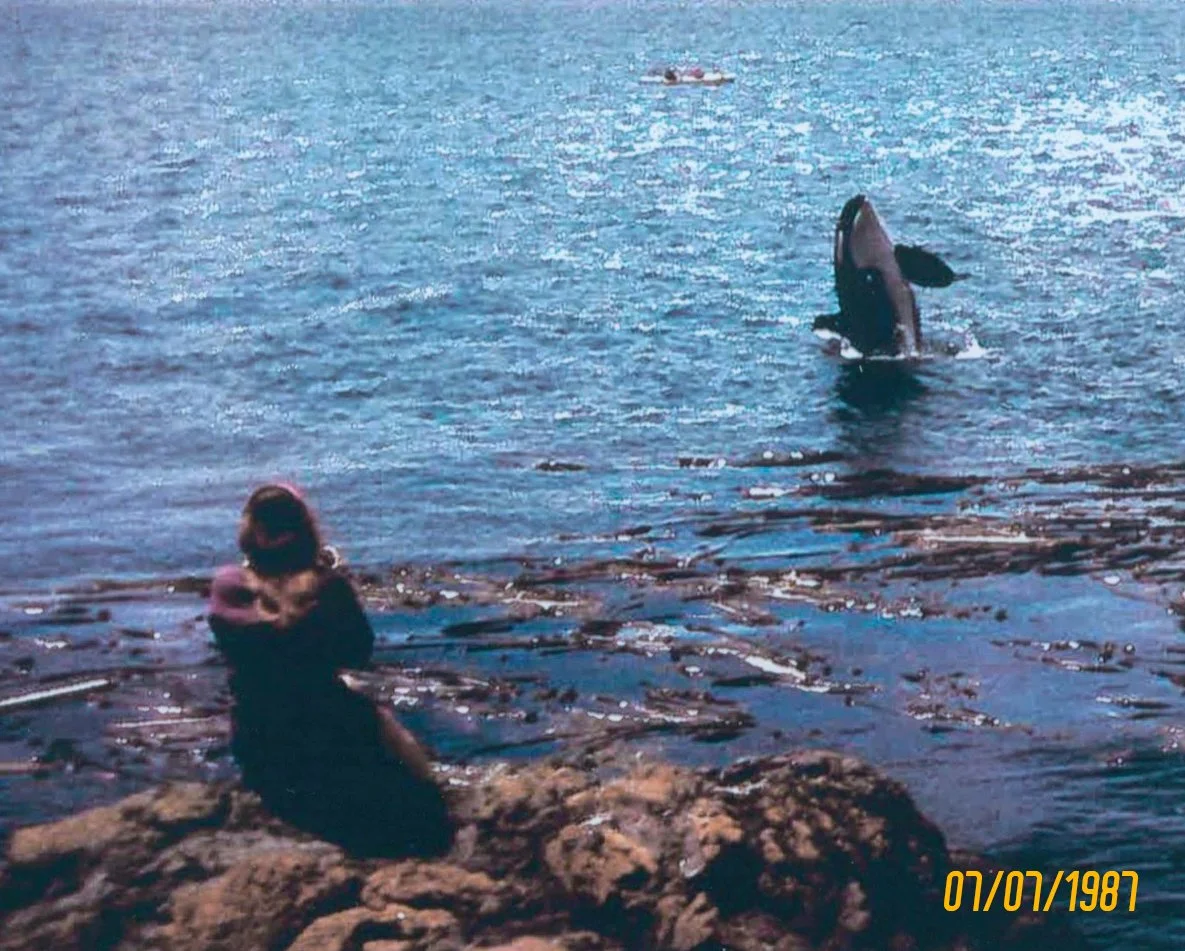
We crested the hill on the west side of San Juan Island and watched as Haro Strait opened up before us. It was July 7th, 1987—my 18th birthday.
Next came the sound of blows echoing across the water, and there they were: nearly a hundred Southern Resident Killer Whales all within calling distance of each other! I would later learn that every member of J, K, and L Pods was in attendance that day. A true Superpod.
I stepped out of the car and started to cry.
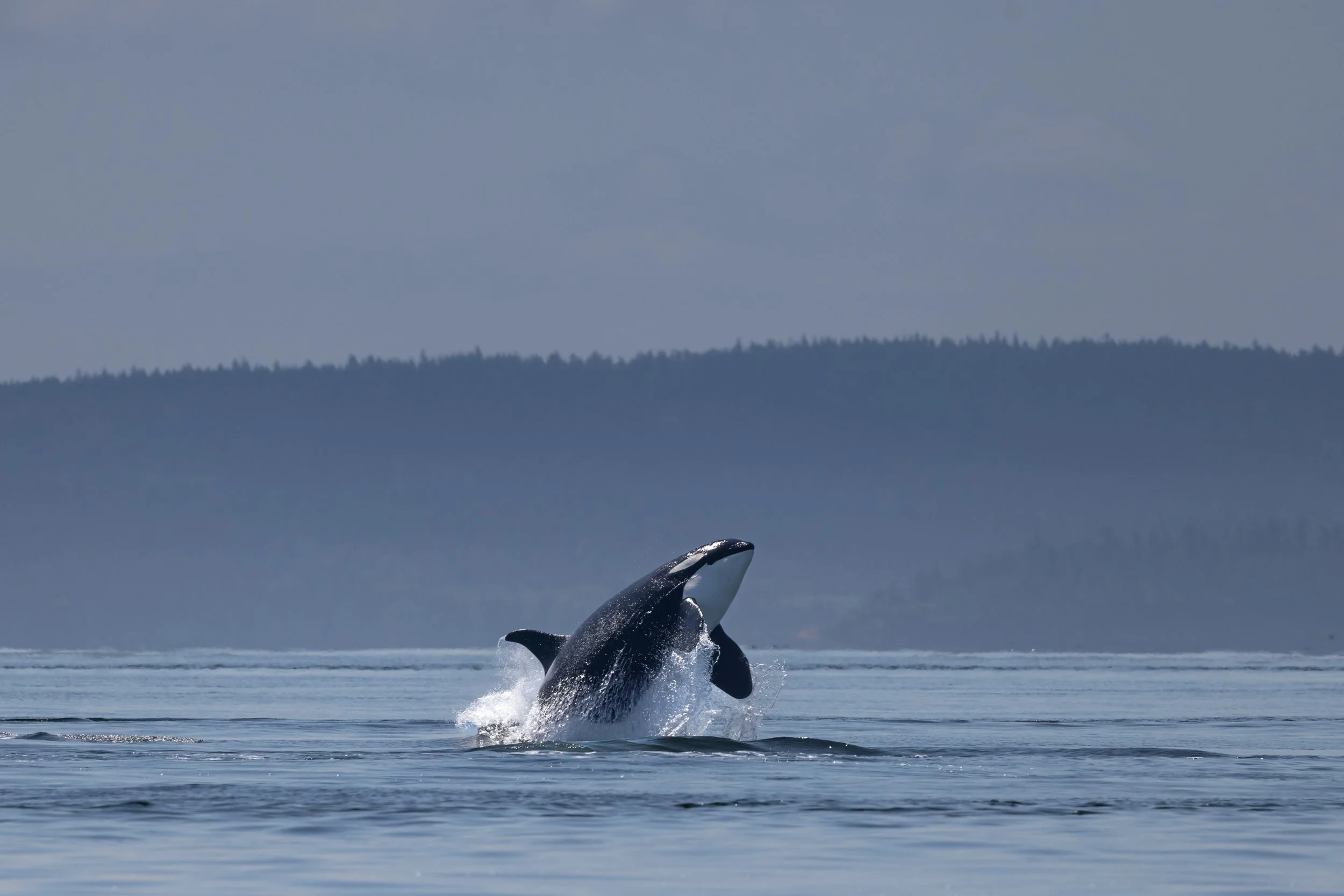
Nearly four decades later, Superpods like the one I saw on my first visit to the Salish Sea are now extremely rare, and it’s not uncommon for these “resident” whales to disappear for months at a time. Their food source, Chinook salmon, are in as much peril as the whales themselves.
But after 40 years of studying orcas, I refuse to give in to despair. We owe more to these animals, and a brighter future is possible thanks to supporters like you.
At my longtime nonprofit, Wild Orca, these whales have been my world. Now, after years of collaboration with Dr. Joe Gaydos, Wild Orca has merged with the SeaDoc Society! It’s the natural next step for the whales and our shared home—continuing 25 years of vital work. I couldn’t be more excited to be part of Team SeaDoc!
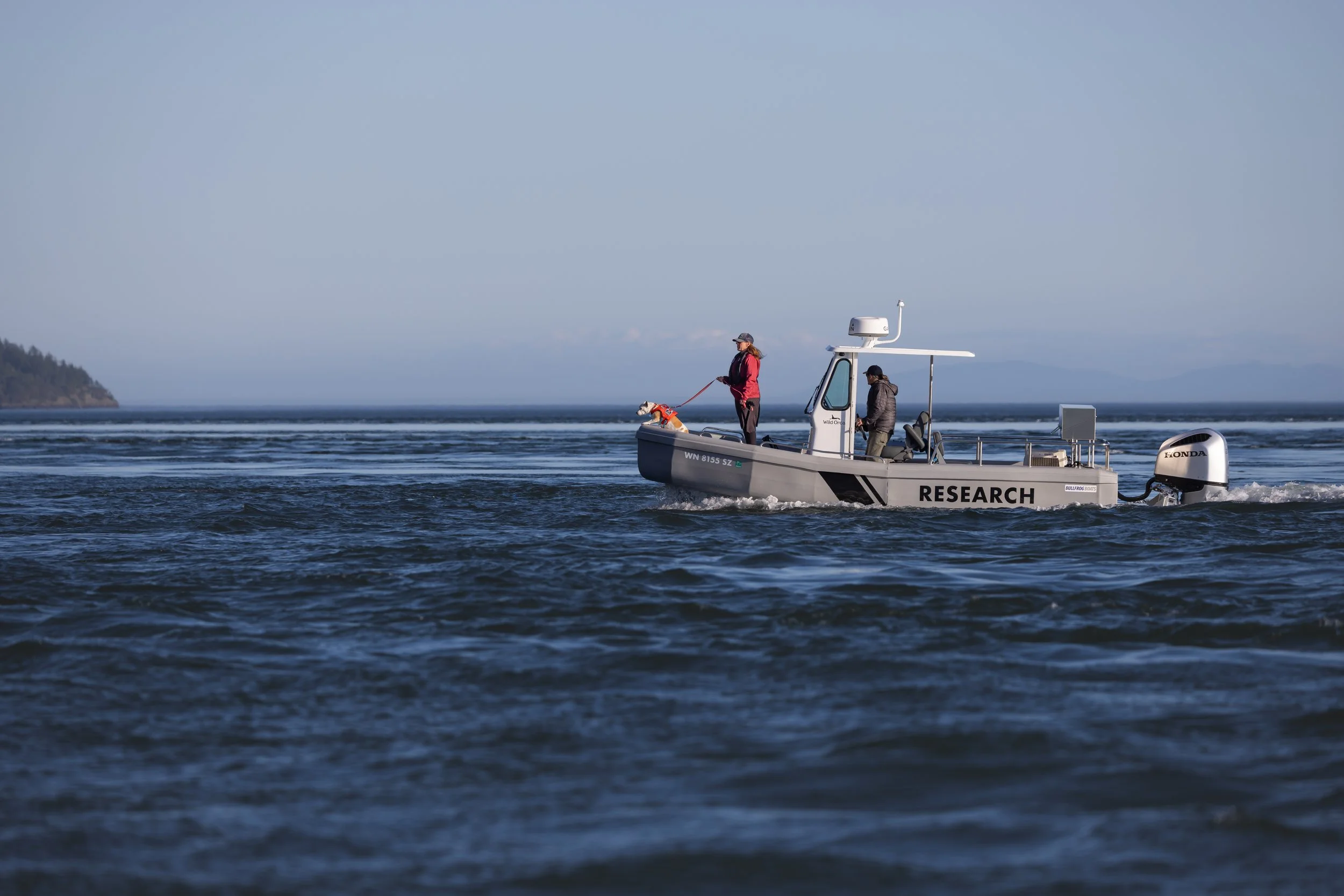
Joining me is my most loyal field partner, Eba—the certified whale-poop-sniffing research dog. With the Southern Resident population now down to the low seventies, every whale matters. Eba, with her sniffing superpower, helps us collect the data that’s critical to understanding and protecting them. She’s also the best coworker you could ask for!
SeaDoc Society is committed to making an impact in the Salish Sea through science—whether it’s shepherding research that shapes policy or telling powerful stories that educate and inspire. For Joe and me, this partnership is a natural evolution of the work we’ve both dedicated our lives to.
And none of this work would be possible without YOU!
Now more than ever, we need independent science to protect wildlife and this place we love.
Since I’ve joined SeaDoc, I’ve been in awe of the breadth of our team’s work. Last spring in a Seattle conference room, I had a front-row seat as our brilliant Science Advisory Committee discussed and ultimately selected the four research projects SeaDoc would fund in 2025. As a scientist, it was deeply inspiring to watch.
Not only is SeaDoc doing the work, but we’re also making vital research possible for fellow collaborators here in the Salish Sea. That’s unique and powerful for an organization of SeaDoc’s modest size. It’s a nimble team that punches far above its weight, and YOU are a critical member of that team!
We left that room having funded four new projects, from cutting-edge eelgrass restoration and Dungeness crab work to studies that will benefit clam fisheries and Southern Resident killer whales.
These projects—all led by Salish Sea non-profits and local tribes—won’t just produce papers; they’ll change how we understand and care for this special place. Your support has funded impactful science in this special ecosystem every year for a quarter century!
The Salish Sea is resilient. We’ve seen populations rebound, habitats restored, and communities come together to protect what they love. But that progress only continues when people like you invest in it.
I’m thrilled to share that longtime SeaDoc donor Janice Sears is offering a $25,000 matching gift through the end of the year—meaning your donation today will be doubled! Every dollar you give will go twice as far to fund critical research, educate the next generation of marine stewards, and protect the whales, salmon, people and wildlife that depend on this ecosystem.
When I think back to that first Superpod I saw as a teenager, I hold onto that sense of wonder. Working with Team SeaDoc and people like YOU, I am more inspired than ever!
Thank you for supporting our mission and giving us hope. Together, we can ensure that the next chapter for the Salish Sea is one of recovery, resilience, and renewed abundance.
With gratitude,
Dr. Deborah Giles & Eba