
In 2010 and 2011 SeaDoc tracked 10 wild-weaned harbor seal pups and 10 stranded-and-rehabilitated pups to see what the differences were between the two groups.
See what we found out: study results
Additional info
- Harbor Seal Facts
- Harbor Seal Skeleton
- Article in Seattle Times
- Article in Vancouver Sun
Background
Each year many stranded harbor seal pups are collected by marine mammal stranding networks and rehabilitated before being released to the wild.
But we don't know if these rehabilitation efforts really work.
A new SeaDoc study will try to find out if rehabilitated seals survive at the same rate as wild-weaned seals, if they have similar movement patterns, and if they even remain in the Salish Sea.
It costs about $3,000 to rehabilitate a harbor seal pup. Rehabilitation rates have improved over time, to the point where the Wolf Hollow Wildlife Rehabilitation Center in San Juan County has a rehabilitation rate of 77%.
Our study -- funded by the John H. Prescott Marine Mammal Rescue Assistance Grant Program, the U.S. Federal Government, and private donations from SeaDoc supporters -- will monitor the movement and survival of 10 rehabilitated pups and 10 wild-weaned pups. By comparing the results from these two different populations, we'll be able to assess whether rehabilitation efforts are working they way we expect.
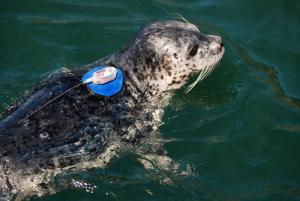
Pups are tagged with satellite transmitters as well as VHF tags on their flippers. This allows them to be tracked automatically by satellite with a backup tracking mechanism of local VHF tracking.
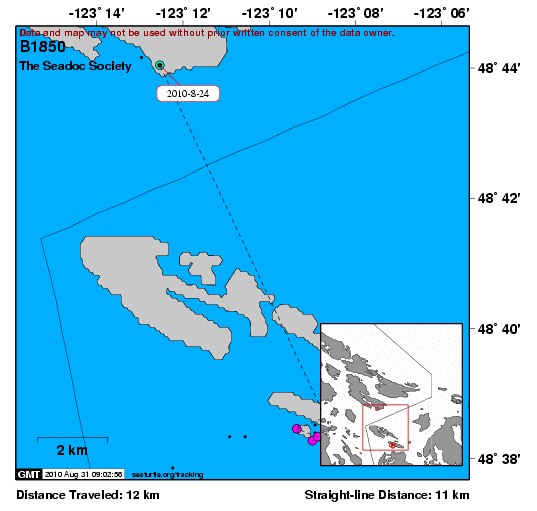
The satellite data network produces maps showing the seals' locations over time.
Our maps are prepared by Austen Thomas of Salish Sea Cartography. Realtime maps are thanks to support from seaturtles.org.
Watch the seal rehabilitation study in action
The seal rehabilitation study is ongoing in the fall of 2010.
You can get real time maps built from the satellite data at http://www.wildlifetracking.org/index.shtml?project_id=541
We also have high-resolution maps updated weekly.