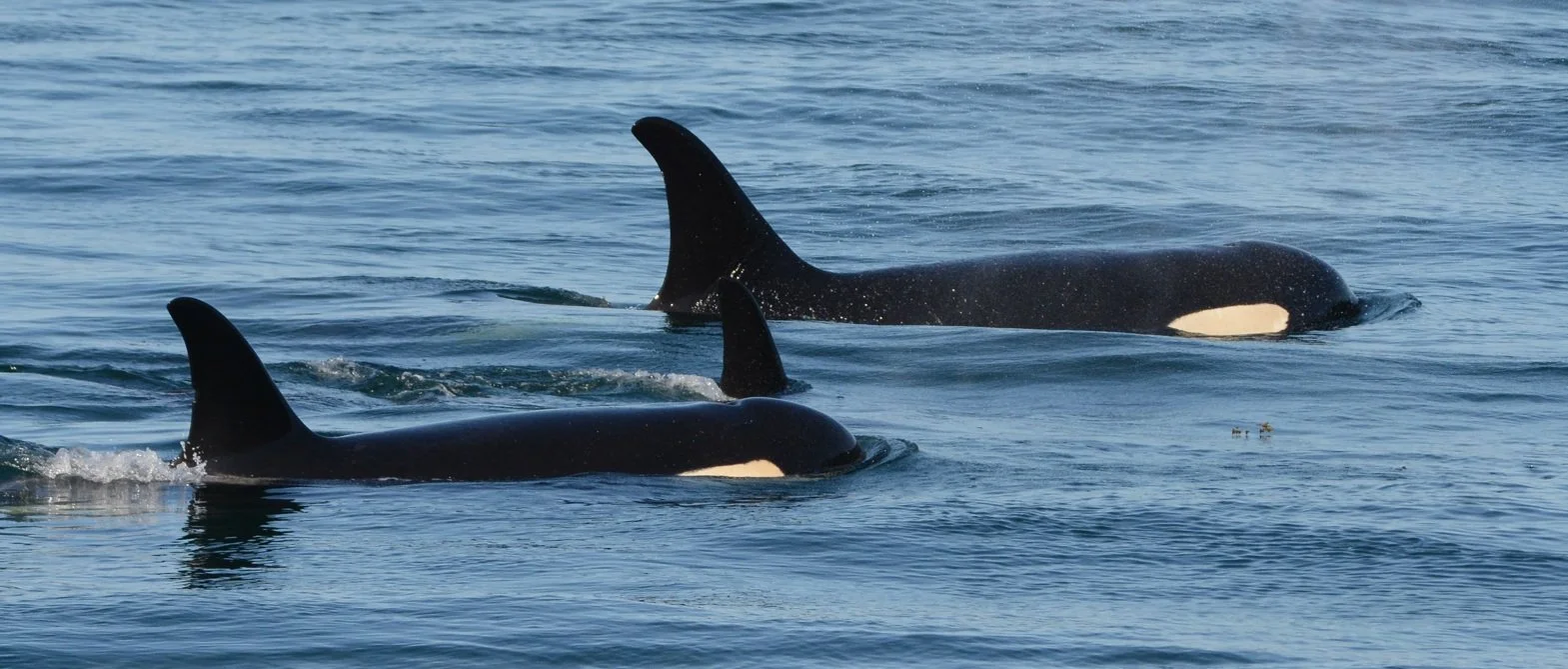
New research suggests heavy metal intoxication is not a concern for endangered killer whales.
From mercury and cadmium to selenium and zinc, the elements that accumulate in an animal's body can offer valuable clues about its health and the environment it inhabits. A newly published study in the international journal PLOS ONE is helping scientists better understand what those clues look like in one of the Pacific Northwest's most iconic marine mammals: killer whales.
Drawing on 25 years of opportunistically collected tissue samples from stranded killer whales across the northeastern Pacific Ocean, researchers analyzed concentrations of both essential and non-essential elements in three distinct killer whale ecotypes—fish-eating residents, mammal-eating transients, and offshore killer whales that specialize in eating sharks and other fish. The study represents the largest and most comprehensive dataset of its kind ever assembled for killer whales worldwide.
The research was led by SeaDoc Society scientist Catherine Lo and included collaborators from multiple institutions that have contributed to the growing body of knowledge on killer whale health.
“This work significantly expands our understanding of elements in these killer whales,” said Lo. “It lays the groundwork for future biomonitoring and will help us better understand the role elements play in affecting killer whale health.”
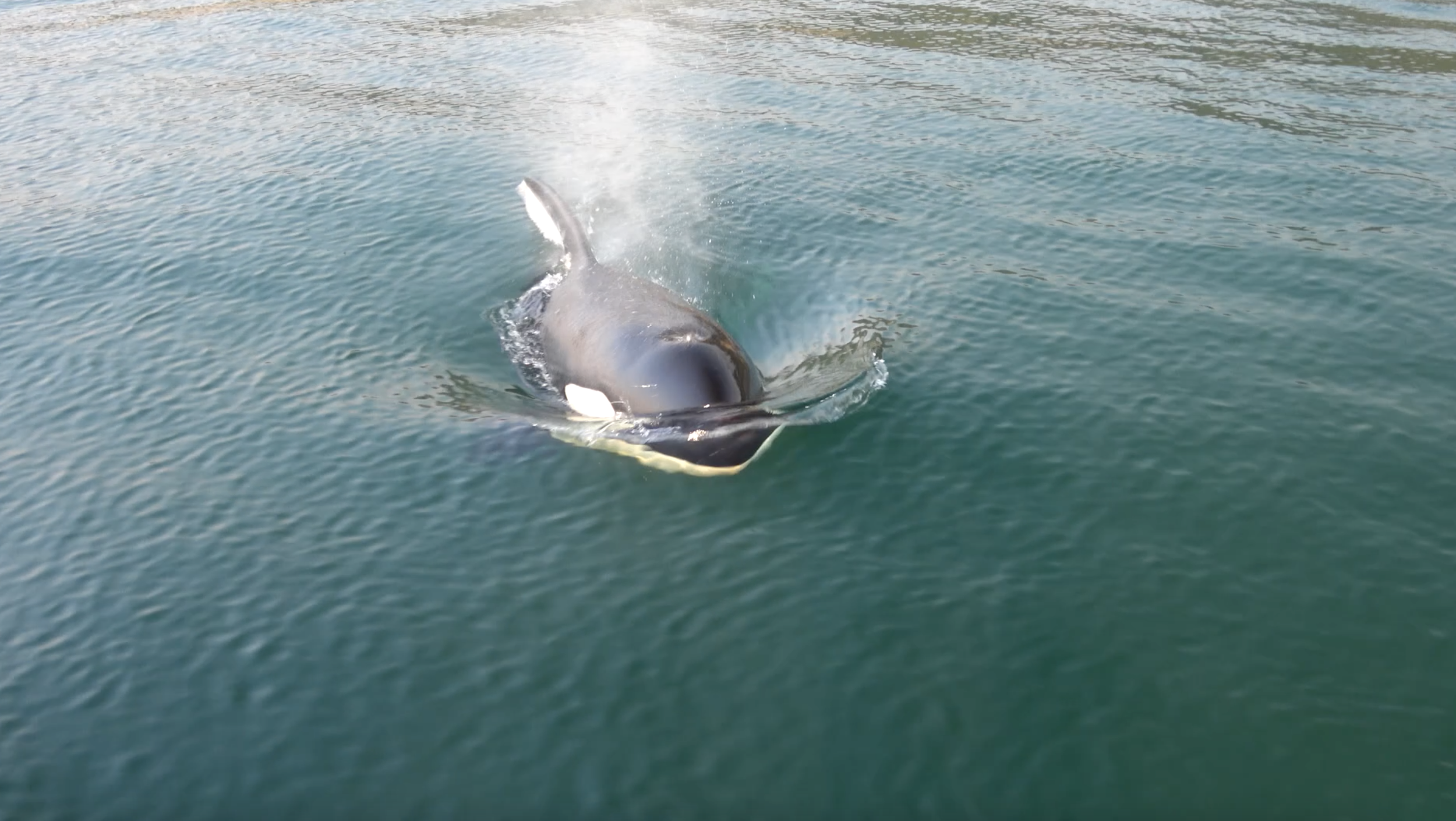
Using liver and kidney samples collected from 35 killer whales that stranded between California, Alaska, and Hawaii, the researchers measured concentrations of 20 different elements, including mercury, lead, cadmium, selenium, and copper. They also examined how those concentrations varied by age, sex, and killer whale population.
While certain elements accumulated differently depending on life stage and ecotype, the study found no microscopic evidence of toxicosis, which is a poisonous effect caused by exposure to toxic substances. However, the authors note that it remains impossible to rule out more subtle health impacts that may have existed before the animals' deaths. That includes reproductive, immune, or other subclinical effects that are difficult to detect from stranded animals.
Investigating contaminants and disease in killer whales is hard. Unlike many marine mammal species, killer whale strandings in the Salish Sea and beyond are rare, making opportunities to study their health few and far between. Every sample collected is a valuable piece of a much larger puzzle.
“The decline of the killer whale population in the northeastern Pacific is likely multifactorial,” said Stephen Raverty of a Veterinary Pathologist at the Animal Health Center and a co-author on the study. “Field observations, review of population demographics and more specialized research efforts will improve our understanding of what may pose a risk to individual and population health.”
The findings are important because they establish foundational data that scientists can use to monitor environmental contaminants and better understand how they may affect killer whale populations over time. Such information could prove especially valuable for endangered populations like the Southern Resident killer whales, which face numerous threats including lack of salmon to eat, vessel noise, and contaminants.
The study also highlights the importance of long-term collaboration in marine wildlife science. The tissue samples used in the research were collected over decades by numerous organizations and researchers throughout the northeastern Pacific, underscoring the value of coordinated efforts such as the developing Killer Whale Health Database.
“This study is an example of how samples and data that are collected over long time series using standardized protocols provide a unique opportunity,” said SeaDoc Society Scientist Michelle Lino. “They allow us to integrate information across collaborating institutions and ultimately lead to key insights about the health of this endangered population.”
By building robust baseline datasets, scientists are better equipped to detect emerging health threats and inform conservation efforts for killer whales across the Pacific.
As researchers continue to investigate the complex relationships between contaminants, nutrition, disease, and environmental change, studies like this one provide critical pieces of the broader picture of killer whale health.
"We need more papers like this,” said Caroline Moore, Veterinary Scientist with the San Diego Zoo Wildlife Alliance. “Long-term retrospective and forward-thinking studies that establish baselines while investigating links to toxic thresholds. These address a data gap in SKRW essential and non-essential elements, allowing future studies a benchmark across age, sex and ecotypes to address if contamination is getting worse and contributing to the decline in SKWR health. These threats are often invisible, and it is only through in-depth surveillance studies can we tease apart variable threats to wildlife and hope to make a difference."
The paper, "Elemental concentrations in northeastern Pacific killer whales (Orcinus orca)," was published in PLOS ONE.
Read the study: http://journals.plos.org/plosone/article?id=10.1371/journal.pone.0353196
COLLABORATORS
Catherine Lo - SeaDoc Society, UC Davis
Joseph K. Gaydos - SeaDoc Society, UC Davis
Robert Poppenga - California Animal Health and Food Safety Laboratory System, UC Davis
Lynne Barre - NOAA (retired)
Kathy Burek-Huntington - Alaska Veterinary Pathology Services
John Calambokidis - Cascadia Research Collective
Paul Cottrell - Fisheries and Oceans Canada
Debbie Duffield - Portland State University
Jessica L. Huggins - Cascadia Research Collective
Dyanna M. Lambourn -Washington Department of Fish and Wildlife
Jim Rice - Marine Mammal Institute, Oregon State University
Heindrich N. Snyman - Animal Health Laboratory, University of Guelph
Judy St. Leger - Cornell University
Matthew Van Daele - Sun’aq Tribe of Kodiak
Kristi L. West - Health and Stranding Lab, Human Food, Nutrition and Animal Sciences, UH at Mānoa
Forrest M. Gomez - National Marine Mammal Foundation
Stephen Raverty - Animal Health Centre
—
The SeaDoc Society is a marine science organization in the Salish Sea working to ensure the health of marine wildlife and their ecosystems through science and education.
Media contact: Justin Cox, SeaDoc Society: 530-219-5227 or jcox@ucdavis.edu