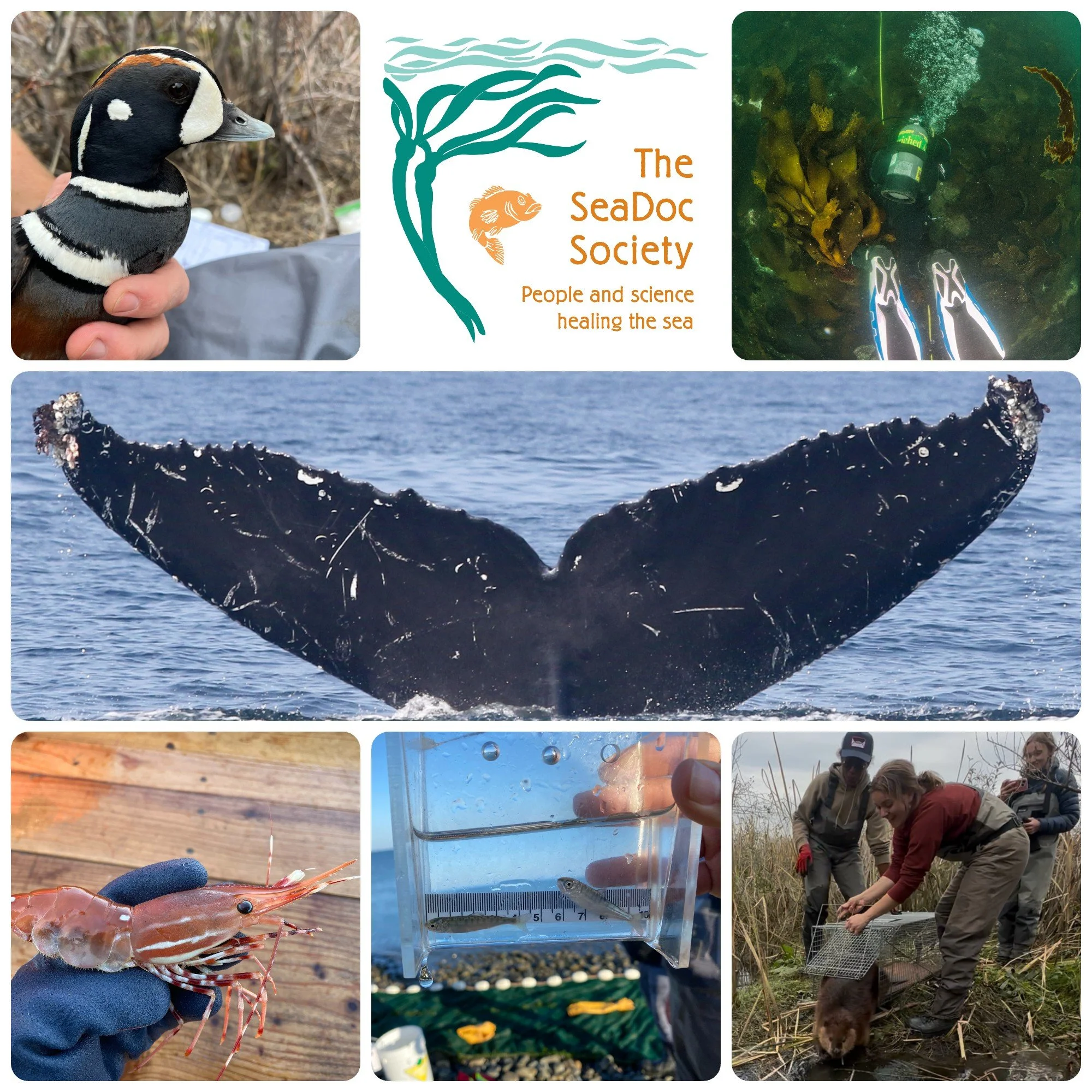
We’re excited to announce that SeaDoc Society will fund six new science projects in 2026, investing nearly $270,000 in research to better understand and protect the Salish Sea. Carefully selected by our brilliant Scientific Advisory Committee and made possible by passionate donors like you, these projects tackle some of the region’s most important conservation challenges.
This year we made an Open Call for grants and as well as a call for Tribal and First Nations grants. For the last 25 years, SeaDoc has supported science aimed at making a concrete change and a lasting difference—this year, surpassing $4 million worth of research along the way.
At a time when conservation research funding is increasingly difficult to secure, we’re especially grateful to help make this important work happen.
From tracking tidal beaver populations in the Snohomish Delta and mapping juvenile salmon movement in the Roberts Bank Estuary to improving kelp monitoring, reducing ship-strike risk for humpback whales, understanding spot prawn connectivity, and using thermal drones to survey harlequin ducks, these projects all display sharp science with practical and vital conservation outcomes.
Read more about the funded projects and the scientists leading this work below!
Tribal / First Nation Grants
Mapping and Tracking Beaver in the Snohomish Delta Tidal Marshes
Led by Todd Zackey, Tulalip Tribe
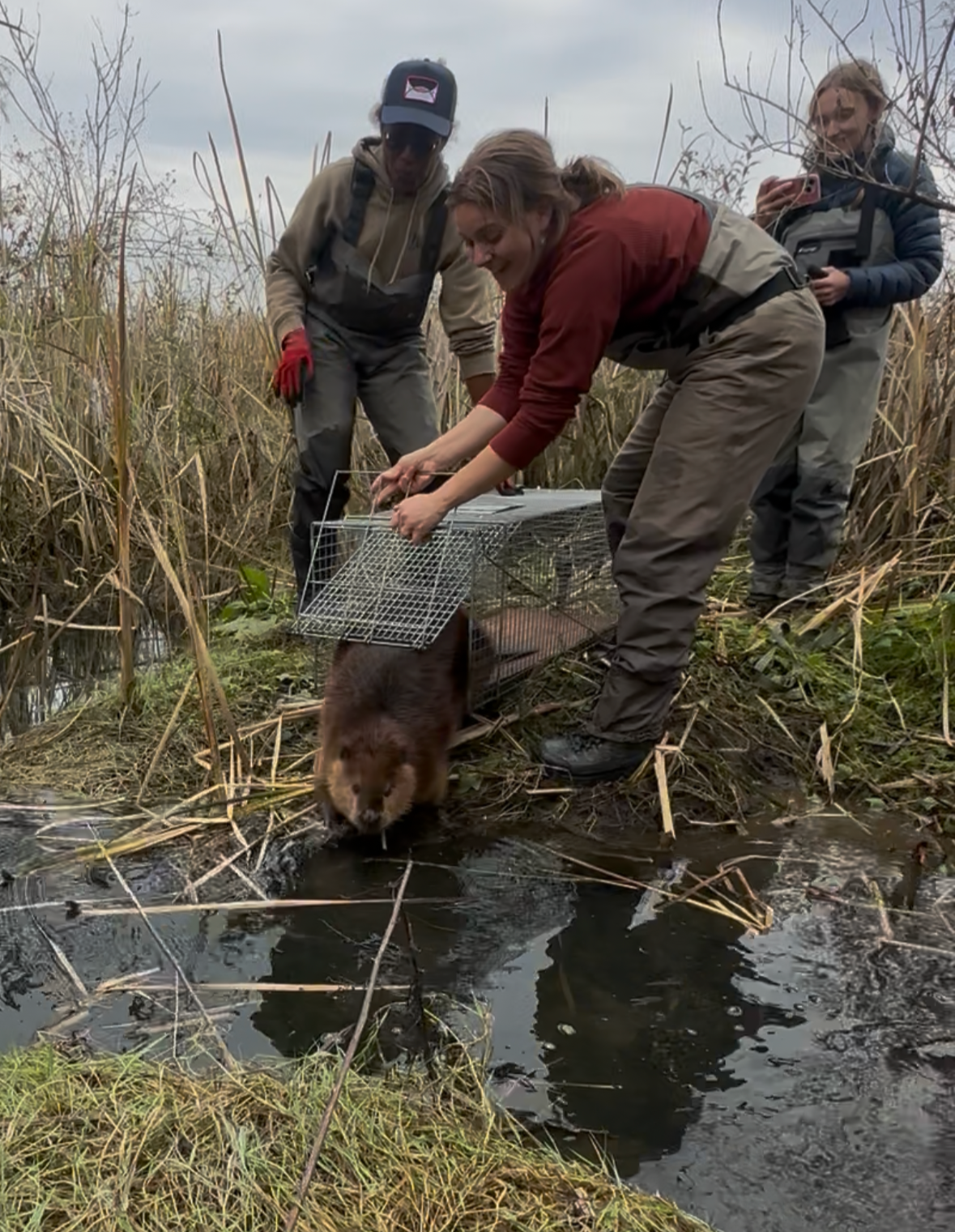
Photo courtesy of Tulalip Tribe
The team will trap eight beavers in the Snohomish Delta tidal marshes and affix GPS transmitters to them to log their locations. They will use this information along with existing maps of tidal channels, vegetation communities, beaver dams and lodges to calculate daily travel distances and routes, preferred habitat, activity patterns, and territory size. Because tidal beavers are unstudied outside of this research, this will all be novel information. It will provide guidance for tidal marsh restoration that accommodates tidal beavers and their ecosystem functions. This project is funded through SeaDoc Society's Tribes and First Nations Grant.
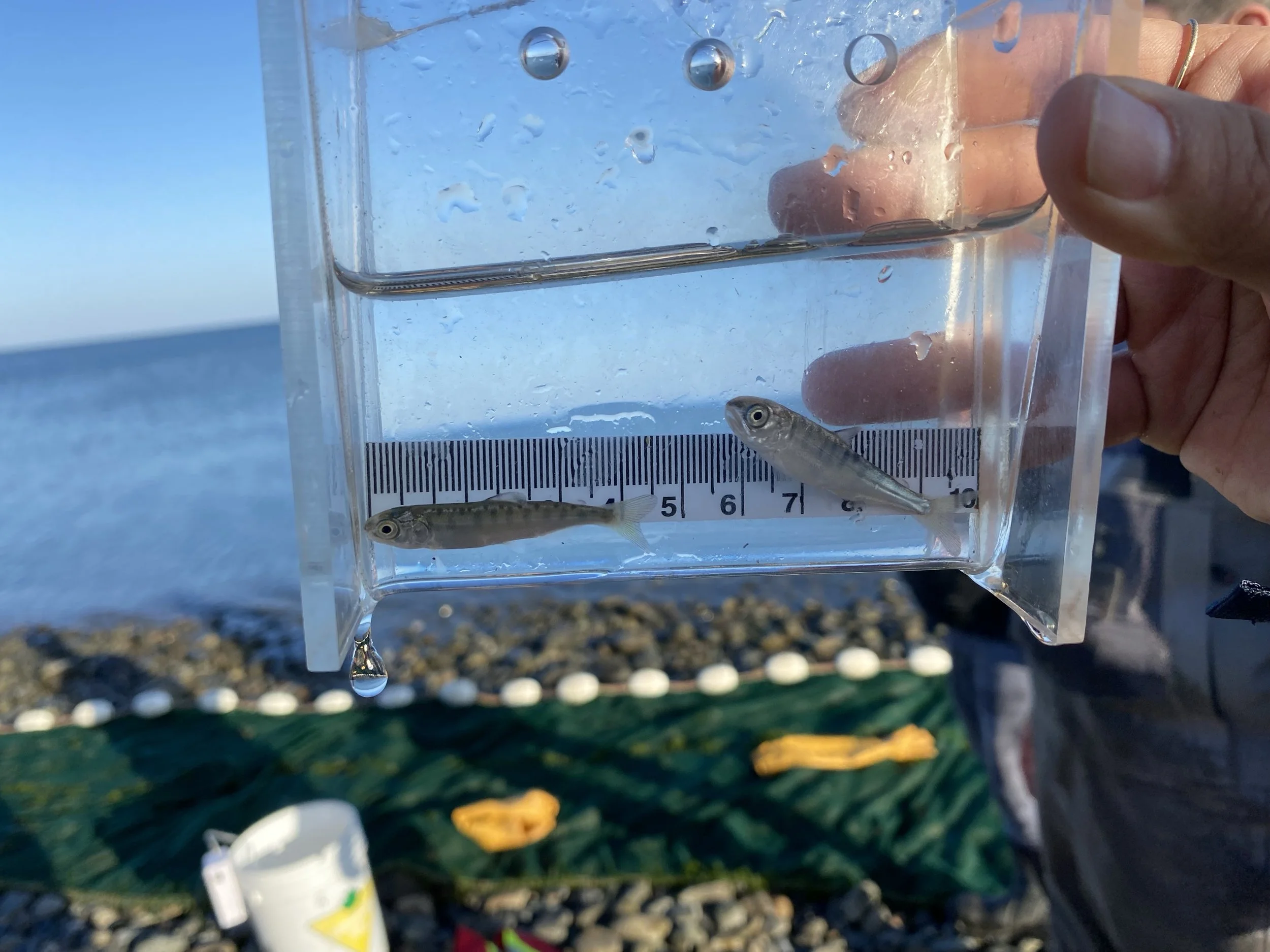
Photo by Tsawwassen First Nation
Juvenile Salmon Movement in the Roberts Bank Estuary
Led by Maria Plaza, Musqueam Indian Band and Kelly Scott, Tsawwassen First Nations
The Roberts Bank Estuary provides critical habitat for juvenile Chinook and Chum salmon as they move through key habitats such as salt marshes, sandflats, and eelgrass beds. The potential impacts of the Roberts Bank Terminal 2 Project on juvenile fish passage for these culturally and ecologically important species remains uncertain. Musqueam Indian Band is working in collaboration with Tsawwassen First Nation to study these potential impacts. Funded through SeaDoc Society's Tribes and First Nations Grant, the project will use novel acoustic telemetry technology to quantify movement patterns, habitat use, and interactions with structures including the causeway, informing mitigation measures and management decisions going forward.
Open Call Projects
Puget Sound Vital Sign Indicator Development: Understory Kelp Abundance and Condition
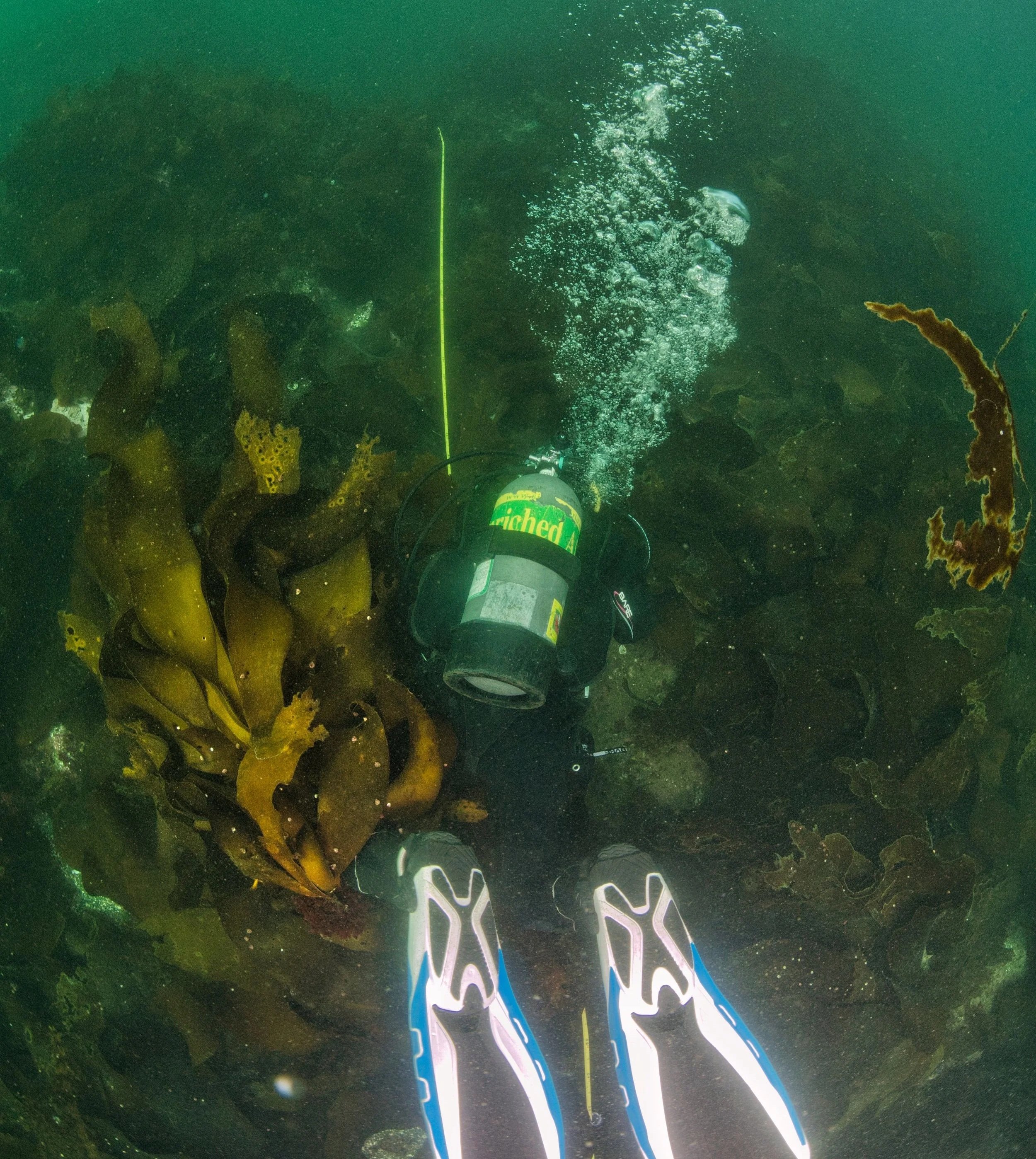
Photo of REEF diver Shou Wei Chang
Led by Jan Freiwald, Reef Check and Zachary Randell, Seattle Aquarium
Puget Sound kelp forests are changing, but current reporting only tracks kelp visible at the surface, which misses most of the important species growing below. Reef Check and the Seattle Aquarium will develop a new indicator to measure the abundance and condition of understory kelp species using diver surveys and underwater imagery. This tool will help managers better understand ecosystem changes, identify priority areas for protection and restoration, and make more informed decisions to support kelp recovery across the region.
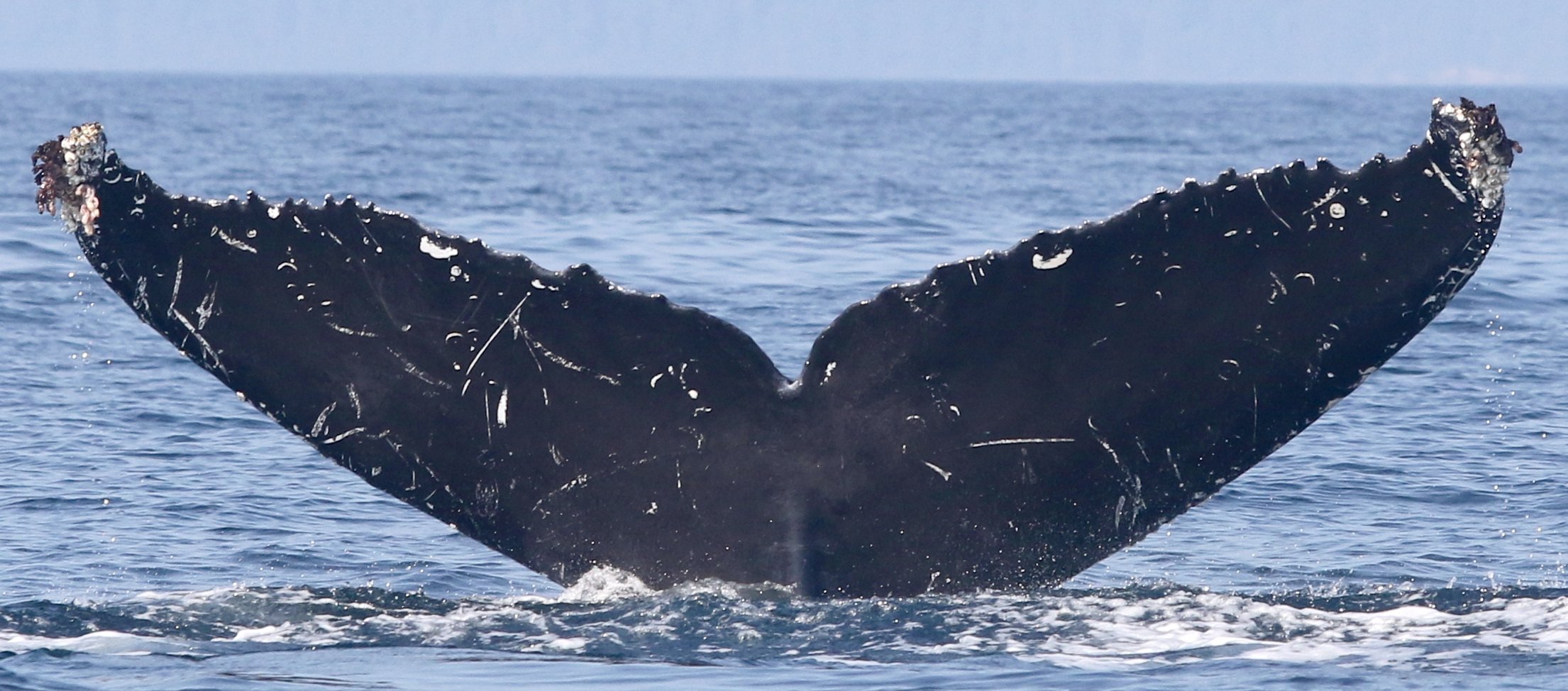
Photo by John Calambokidis, Cascadia Research Collective
Identifying oceanographic drivers of humpback whale (Megaptera novaeangliae) habitat use and hotspots of large vessel ship-strike risk in the Salish Sea
Led by Jennifer Tennessen, University of Washington; Amy Van Cise, University of Washington School of Aquatic and Fishery Sciences; Christie McMillan, Fisheries and Oceans Canada; Tasli Shaw, Humpback Whales of the Salish Sea; and John Calambokidis, Cascadia Research Collective
The Salish Sea is a Biologically Important Feeding Area for Endangered humpback whales who face a rapidly increasing risk of large vessel ship strike. This project will conduct humpback whale surveys and combine data from sightings, surveys, and biologging tags to identify the oceanographic factors that influence where whales spend their time. The team will then compare those patterns with vessel traffic data to identify ship-strike hotspots where management measures, such as vessel slowdowns, could directly reduce risk. The project will also help build capacity for real-time, public-facing ship-strike risk forecasting.
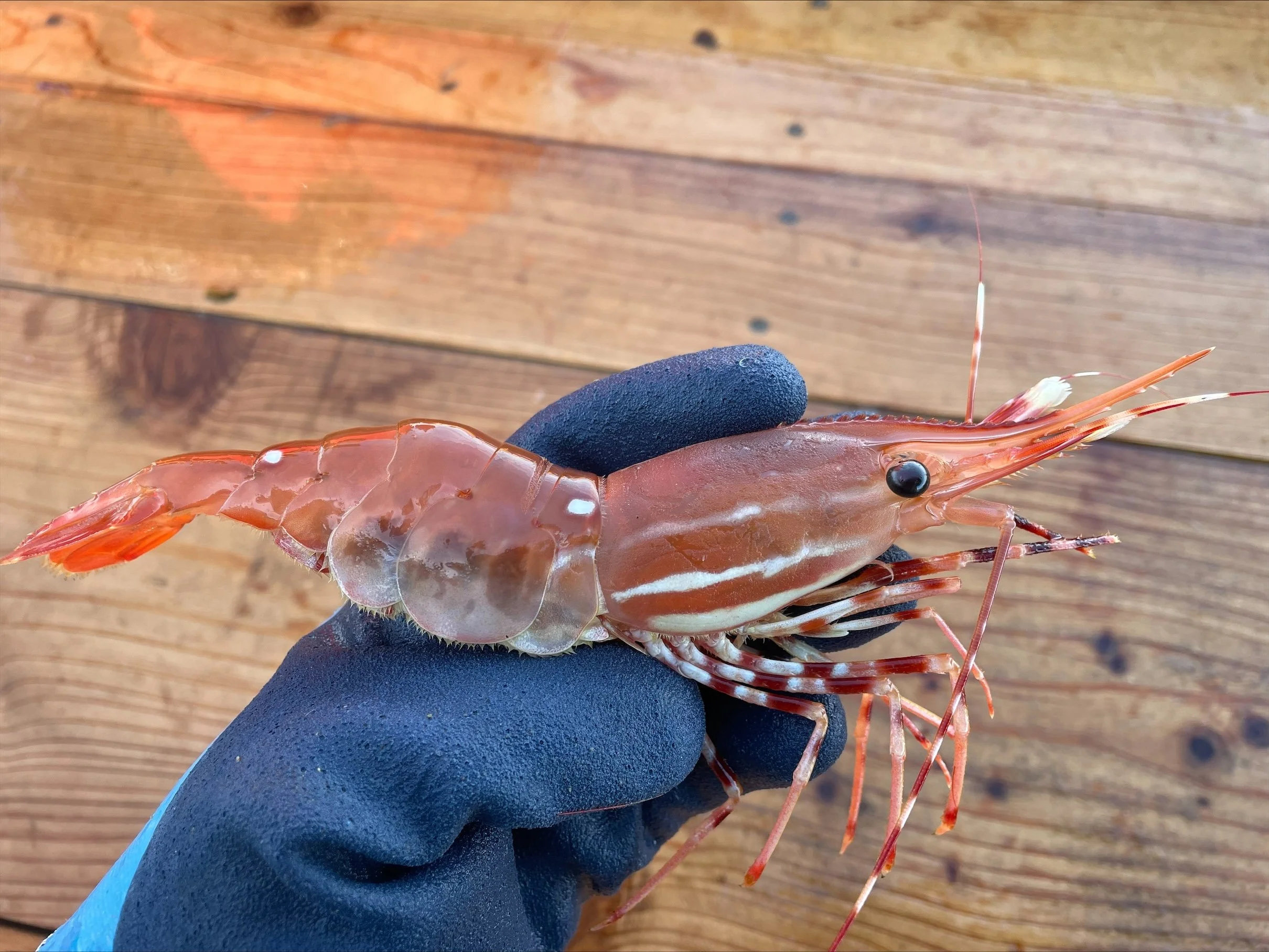
Photo by Courtney Hart, Port Gamble S'Klallam Tribe
Seascape genomics and connectivity of spot prawn (Pandalus platyceros) to support management and conservation in Washington state
Led by James Dimond, Western Washington University
Washington’s spot prawn fishery is economically and culturally important, yet it is managed with little information about how prawn populations are connected throughout the state’s marine waters. This study will determine whether prawn populations are genetically well mixed in the Salish Sea, or if there is more localized population structure due to either isolation, environmental variability, or both. The study will provide actionable guidance to state and tribal fishery co-managers to support more effective monitoring and conservation of Washington’s spot prawn populations
Use of thermal camera-equipped drones to improve breeding surveys for Salish Sea harlequin ducks
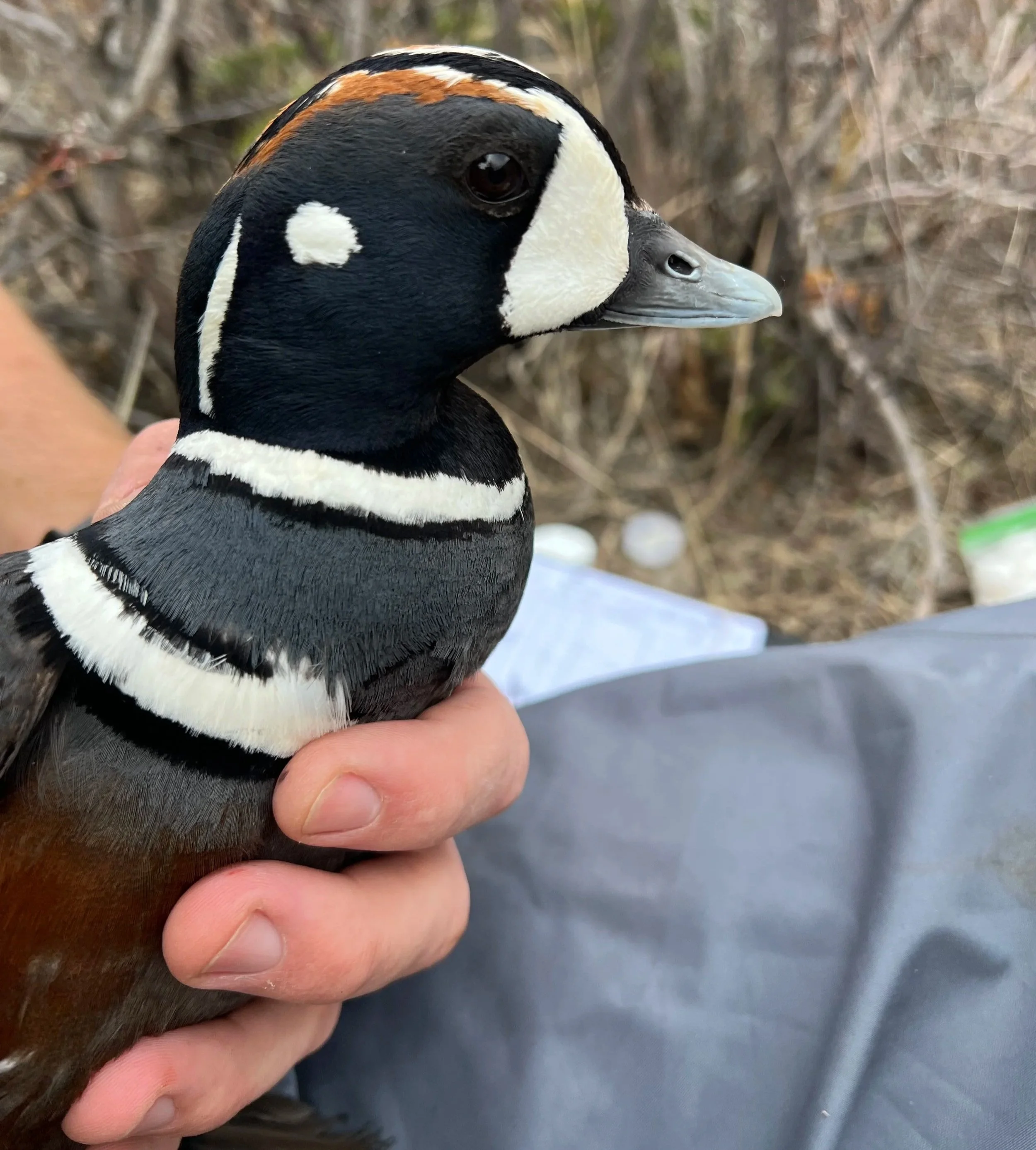
Photo courtesy of California Polytechnical Institute, Humboldt
Led by Robert Blenk, California Polytechnical Institute, Humboldt
This project uses drones equipped with thermal cameras to improve non-invasive survey methods for harlequin ducks breeding in remote streams, where traditional foot-based surveys are difficult, risky, and often effort-intensive to the point of infeasibility. By comparing drone surveys with standard ground methods, we will develop a more accurate, efficient, and safer way to estimate populations, identify important breeding areas, and provide state and Federal agencies with an ongoing protocol to more easily implement surveys for this priority Salish Sea marine species.