When shell-boring marine worms were first documented in Olympia oysters in 2020, they raised an important question for restoration: were these parasites always part of the Salish Sea ecosystem, or were they accidentally introduced with Pacific oysters a century ago? That mystery sent researchers on an investigation thousands of years into the past.
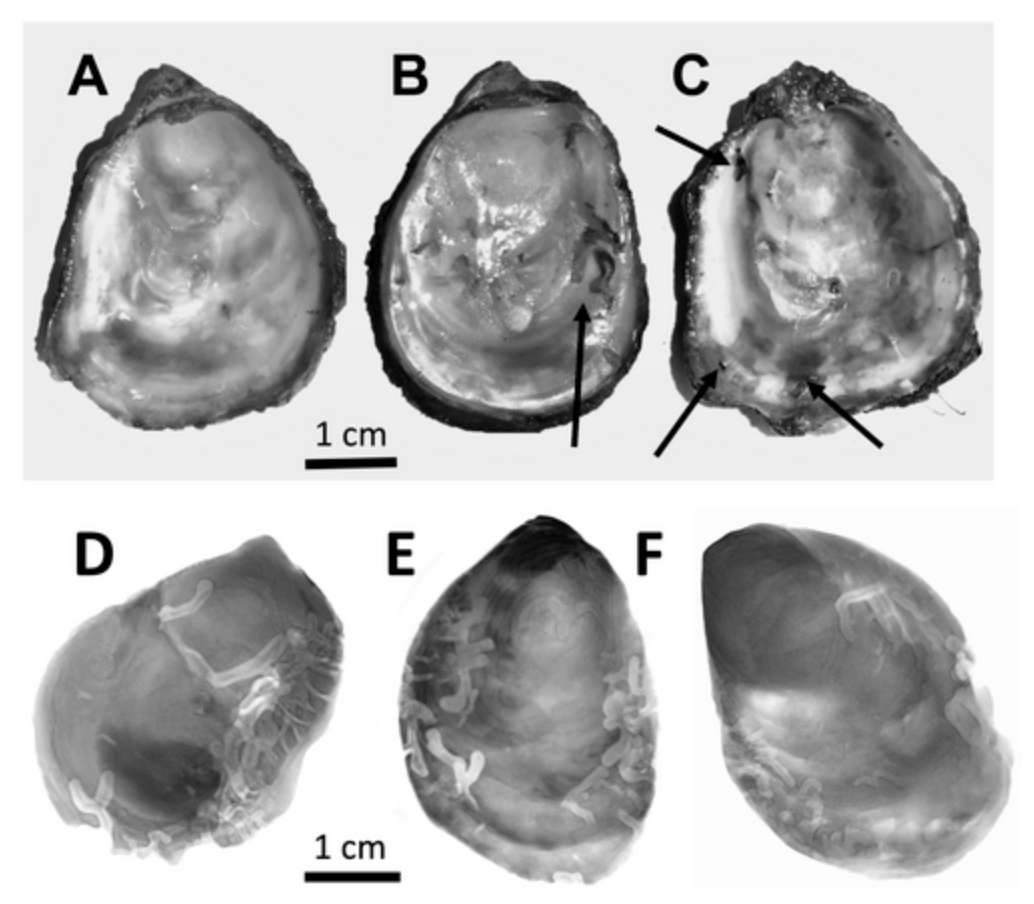
SeaDoc funded Dr. Chelsea Wood, Dr. Julieta Martinelli, and their team to examine nearly a thousand oyster shells from three time periods: ancient fossils, archaeological middens left by Indigenous harvesters, and modern oysters. Using tools like radiocarbon dating, they searched each shell for small worm-made scars that serve as historical evidence of parasitic interaction. The work was published in Aquatic Conservation.
What they found was remarkable. These worms have been living alongside Olympia oysters for at least 80,000 years, making them a native part of the ecosystem, not an introduced threat like some believed.
But researchers also discovered that the parasites are more common today than in the past. The study doesn’t explore why, but it signals that modern oysters are experiencing different pressures than their ancestors did.
That second discovery is especially important looking forward.
By confirming the worms are native, it gives restoration practitioners clarity: the goal isn’t to eliminate an invader but to help oysters thrive alongside a long-standing ecological partner. And because prevalence is higher today, the findings highlight the need for thoughtful restoration strategies—choosing sites carefully, monitoring shell damage, and considering practices that reduce stress during outplanting.
This work adds a valuable historical dimension to SeaDoc’s broader Olympia oyster effort, which includes a project looking at a novel genetics panel to inform management and restoration of the species.
These projects help build a clearer picture of what native oysters need to recover and persist in a changing environment.