
In 2010 and 2011 SeaDoc is tracking 10 wild-weaned harbor seal pups and 10 stranded-and-rehabilitated pups to see if there are any differences between the two groups.
SeaDoc is a science-based marine conservation program. We understand that science informs policy, including priority setting and budgeting.
Washington State faces difficult budget choices. With multi-billion-dollar shortfalls, lawmakers are scrutinizing every line item. In moments like this, funding that supports biodiversity — everything from living soil to forests, from bugs to whales, and from mountain streams to the sea—can look like a luxury. It is not.
Science is at the foundation of everything we do at SeaDoc—from Salish Sea Wild and Pod of Orcas to our efforts to inform policy. For decades our Scientific Advisory Committee has played a vital role on that front.
The Committee is made up of respected individual scientists doing important work throughout the Salish Sea. This month we say a heartfelt goodbye to one longtime advisor, Meg Chadsey, and we welcome two new exciting additions, Jennifer Russell and Lisa Watkins.
After years as part of our small but mighty Admin Team, our friend and coworker Michelle Homewood completed her time at SeaDoc last month. She’ll now embark on the exciting next chapter of her career.
As an Administrative Assistant with SeaDoc, Michelle’s hands were on everything from arranging field-work logistics to processing the donations that make that work possible.
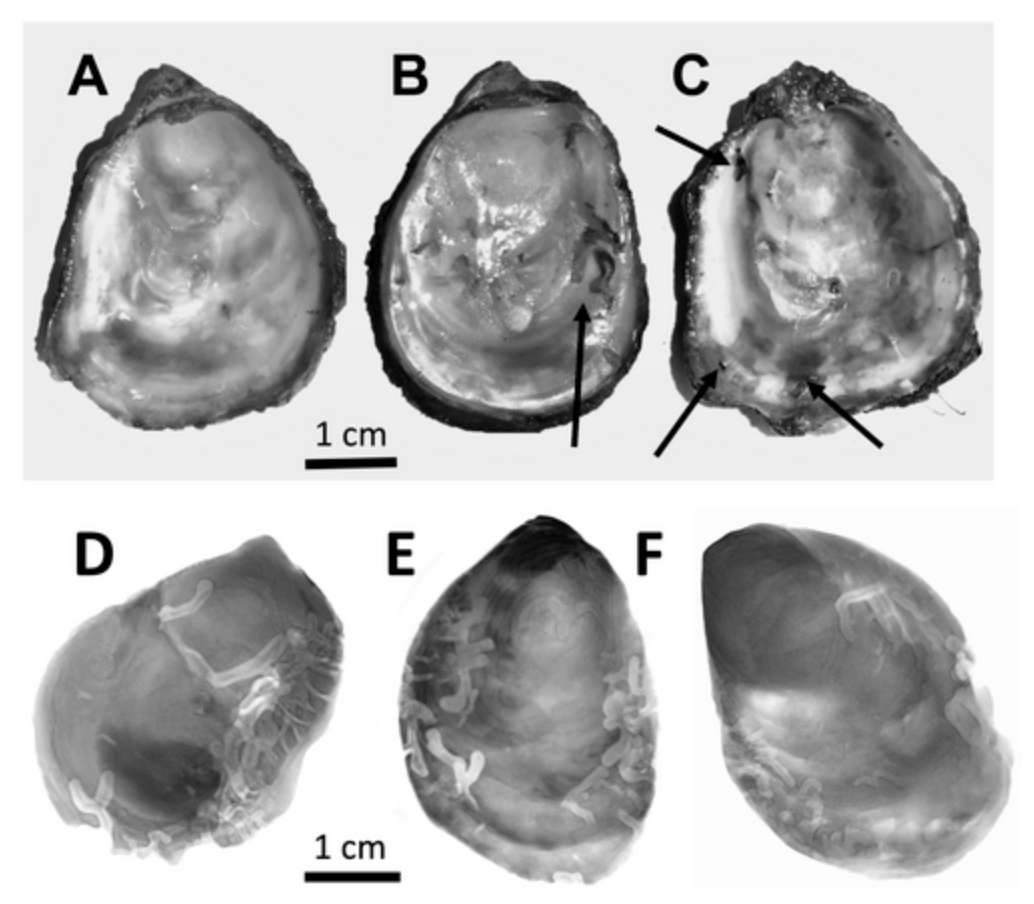
When shell-boring marine worms were first documented in Olympia oysters in 2020, they raised an important question for restoration: were these parasites always part of the Salish Sea ecosystem, or were they accidentally introduced with Pacific oysters a century ago? That mystery sent researchers on an investigation thousands of years into the past.
In 2010 and 2011 SeaDoc is tracking 10 wild-weaned harbor seal pups and 10 stranded-and-rehabilitated pups to see if there are any differences between the two groups.

Love marine mammals? Why not have a harbor seal announce your incoming calls?
We created this ringtone from a recording Joe Gaydos made of a harbor seal.
Download the ringtone for iPhone.
(Right-Click on the link -- or Control-Click on a mac.)
Technical Note: Firefox handles the download properly. Safari on the Mac downloads a useless file. We're way beyond our geek threshold in terms of why this might be happening.
Click here to listen to the ringtone before downloading. (Works in most browsers.) That's an MP3 you can also download for use as a ringtone on Android.
This ringtone works on iPhones. It MIGHT work on Android and other phones. If you're an Android user and want to test it for us, let us know if it works. And if you're an Android guru and can help us create the right kind of file and write the installation instructions, definitely get in touch.
Here's how to install the ringtone on your iPhone:
Unfortunately, we're not able to provide technical support for installing the ringtone. If you get stuck, try a Google search, as several websites have illustrated guides to adding ringtones to your phone.
Don't miss our killer whale ringtone.

Lost fishing gear is commercial and recreational fishing gear -- nets, traps, pots, line -- that becomes lost or is discarded in the water.
The gear ends up sitting on the sea floor, getting caught on rocky reefs, or floating in the water column.
The majority of this lost gear does not decompose in seawater and can remain in the marine environment for years.
Lost gear impacts the marine environment in several ways: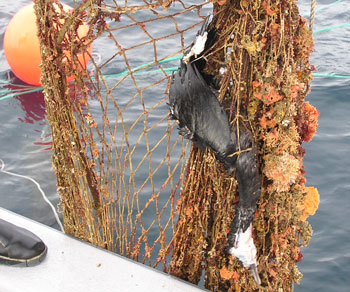
Lost gear is also a visual blight, diminishing the natural aesthetic quality of the seafloor and rocky reef habitat for underwater enthusiasts.
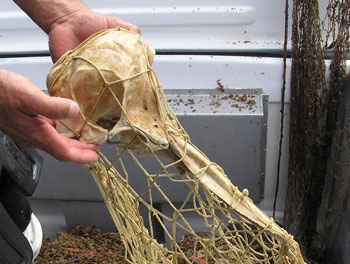 SeaDoc works on derelict fishing gear in California and in the Salish Sea.
California
Our executive director, Kirsten Gilardi, runs the California Lost Fishing Gear Recovery Project out of the Wildlife Health Center offices at the UC Davis School of Veterinary Medicine. (Dr. Gilardi is also co-director of the Mountain Gorilla One Health Project and the Envirovet Summer Institute.)
Click here for details on the California program.
 Salish Sea
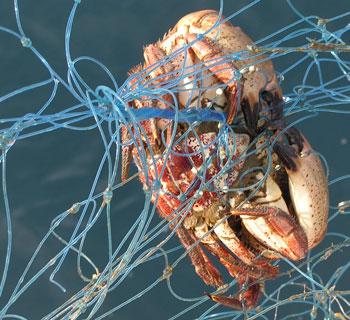
SeaDoc provides technical assistance and support for derelict gear removal in the Salish Sea. We have worked closely with the Northwest Straits Commission to analyze data from recovered nets to determine the economic impact of lost gear and its removal.
The results showed a clear return on investment for removing nets. For example, we calculated that an abandoned net might kill almost $20,000 worth of Dungeness crab over 10 years. Cost to remove? $1,358.00.
Click here to learn more about the economic impact of derelict gear.
Photos by Jen Renzullo. Video by Mike Neil.
This is a transcript of a talk by Joe Gaydos.
The first reason we need marine fish and wildlife research is that scientific information excites us and makes us care; it gives us the information we need to get people excited about marine conservation.
Americans love naming. Maybe it goes back to Adam’s task of naming the animals. Anyway, we feel that if you can name an animal, you know it. But is that really true?
You recognize and can name a harbor seal, but how deep does it dive? How many do we have in San Juan County? What percentage of the harbor seals are estimated to be hauled out at any one time on a very low tide in the summer time? How long can they live? Why has the population rebounded?
Harbor seals can dive to 600 feet with no trouble; then can utilize every foot of our Salish Sea marine ecosystem. We have about 7,000 in San Juan County. We know this because Washington State Fish and Wildlife does aerial surveys in the summer time when we know that about 60% of the seals are hauled out at any one time. Multiply the number counted by a correction factor of 1.6 and you have an estimate for the number of seals. The oldest reported harbor seal was 34 years old. The population has rebounded because of the enactment and enforcement of the Marine Mammal Protection Act. Facts like these make an animal much more interesting than its name alone!
It is the same thing with the Southern Resident Killer whales. Why do we care about saving killer whales?
The first reason is because we are emotionally tied to them. We care because they are a matrilineal society with pod leaders that can live to be 90 years old. A female transient killer whale’s first born son will stay with her for her entire life; that makes us care.
The second reason we care about saving killer whales is because our health is intimately tied to their health and the health of the ecosystem. Southern resident killer whales have some of the highest levels of contaminants in their blubber of any marine mammal in the world. What do they eat? Salmon. How many of us eat salmon? Does that give you cause for concern? It should.
Two porpoise species that frequent the Salish Sea provide us with another good example of how human health and well being is intimately tied to the health and well being of fish and wildlife. By studying wildlife and wildlife health, we can learn more about human health. Have you have heard about Cryptococcus gatii, the fungus that is killing people in Washington and BC? This fungus also has killed about 25 porpoise in the region and disease in porpoise has acted as an early warning for human and domestic animal health. We had dead porpoise in Washington before we this disease was killing people or cats.
The third reason we care about healthy fish and wildlife populations is economics. These Steller’s sea lions frequently seen in the Salish Sea during the winter each weigh about 2,000 pounds. How much salmon do you think one Steller sea lion can eat? What is the impact on endangered salmon stocks? What is the economic tradeoff between having sea lions for ecotourism and having salmon for fishing? I tell you: both salmon and Steller sea lions are important. The importance of salmon is obvious. What about of Steller’s Sea lions? People talk about whale watching, but let’s just talk about watchable wildlife in general rather than focusing on one species. In 2001, over 47% of Washington’s residents participated in wildlife watching. In doing so, Washington residents spent $979 million resulting in a total economic output of $1.78 billion, generating and or maintaining 22,000 jobs. Guess where most wildlife watching occurs” In Washington’s Rural Counties like San Juan County.
Let’s go from a 2,000 pound Steller sea lion, which by the way is larger than a grizzly bear, down to an invertebrate that lives of microscopic plankton. Let’s talk anemones. Let’s talk any of the over 3000 invertebrates we have in the region; take the white-lined dirona, which is just a type of sea slug. It is a beautiful sea slug and it is creatures like these that bring people from all over the world to San Juan County to SCUBA dive. The Washington SCUBA alliance reports that more than 15,000 divers are certified to dive here in the Pacific Northwest yearly.
That’s right, despite the cold water the world’s best known underwater explorer and original SeaDoc Jacques Cousteau rated diving in the Puget Sound as second in the world only to the red sea! More than 1,000 dive related businesses exist in the state.
Let’s move up the food chain a bit. We have over 225 species of fish in the region. In the 1970’s lingcod populations in Puget Sound proper were low, prompting an almost complete moratorium on fishing from 1978 to 1982. The same thing happened in the San Juans in the 80s and 90’s. Good science let us know what was happening with the population and good science gave us a simple solution to solve the problem. Shorten the season. A nine-month fishery with a daily bag limit of 2 was restricted to a 6-week fishery with a daily bag limit of 1. Since 2000, ling cod fishing has substantially improved in the San Juans. This is an example of economics and human health and well being; the ability to harvest local nutritious food. And just like with marine mammals, fish research allows us to learn how cool fish are.
Take a tiger rockfish. We have over 26 species of Rockfish in the Puget Sound area. Science gives us information that excites us about these fish. They are all members of the Scorpionfish family and have poisonous spines. Did you know that? Some are schooling, some are loners, some move, some stay on the same rock their entire adult life. Even if you capture them, take them up into a boat and move them several miles away and release them, they’ll be back at that same rock in a day or two.
Science also is helping us to recover rockfish. When salmon stocks went down in the 1980’s people thought, hey, we can get these people to fish rockfish – hence the big spike in harvest in 1987 and 1989. Only, there was a little problem. We thought rockfish might live 30 years. Some species like the yellow-eye actually can live 118 years!
You see, there is a reason for good science beyond interest, it is called economics.
This is a red- urchin. How old do you think it can live? In Washington State we harvest about 475,000 pounds or about ½ million dollars worth of red urchins annually. I think it is important that we know how long they can live so we can design harvest strategies to sustain the fishery for eternity. Red urchins, by the way, can live to be over 100 years old.
And don’t think I’ve forgotten birds. I have not. We have about 160 species of birds that depend on our marine environment and they embody everything I’ve told you today about why we need research. Take surf scoters as an example. Because the population has declined 50% over the last 25 years we needed to figure out where they went when they were not in Puget Sound. We implanted satellite transmitters and watched these bird - Wow - fly all the way to the Northwest Territories and Ninavut to breed, then back to Puget Sound; maybe some went down to Humboldt Bay to molt and then back here again! The satellite track on one animals shows it flew to the Northwest Territories, across the Beaufort Sea to Alaska then back down to BC and then Washington. Amazing!
Science will amaze you and increase your respect for and appreciation of wildlife. Science also tells us about diseases that birds can carry that can impact human health –diseases like HPAI H5N1, Salmonella, and others. And of course, there is economics of bird recovery and having sustainable populations of wild birds. Bird watching is one of the most popular wildlife viewing activities for Washingtonians, who have the fourth-highest participation rating in the country. Did you realize that 36% of Washington residents regularly participate in bird watching activities? As a side note, only 16% fish recreationally.
So when you see or think about amazing fish and wildlife, think about how much science has helped us. It helps use appreciate how magnificent they are; It helps us understand how their health and the health of the ecosystem is intimately linked to our health; and it helps us economically, whether it was through harvest or through tourism and watchable wildlife.
Many people have been concerned that a burgeoning harbor seal population is responsible for the declines in bottomfish like rockfish, lingcod and greenlings, but nobody has the data to show if this is true or not. If seals are eating large numbers of bottomfish, it’s important to know so we can make good decisions about where to locate bottomfish protection areas.
The Pacific Northwest has 26 species of rockfish that are truly “magnificent,” the translation of their Greek name Sebastes. Unlike many other fish, they give birth to live young, some species can live to be over 100 years old, most have venom glands at the base of their fin spines, and—they just look cool!
You may have seen – and smelled! – a big marine mud flat when the tide is out, and been less than favorably impressed. It may not be readily apparent, but those mucky expanses provide critical habitat to migratory birds. Recently completed work studying the fattening rates of Western Sandpipers (Calidris mauri) is now helping improve our ability to identify and conserve important habitat for migratory shorebirds.
In addition to killer whales, rockfish, and other well-known marine mammals and fish of the Puget Sound region, dozens of bird species depend on our saltwater ecosystem. Some of these birds, like the Western Grebe, winter here and fly farther north to nest in the summer. Others, like the Rhinoceros Auklet, summer here and then move to the open ocean for the winter. And then there are species like the Black Oystercatcher that call this area home year-round.
Can private citizens really help conduct underwater research that will benefit the recovery of threatened or endangered species? Yes! For over three years, the SeaDoc Society has been training recreational SCUBA divers to help count and monitor marine fish and invertebrates in the Pacific Northwest.
How do we judge the health of our marine environment?
Fish and wildlife populations are the ultimate indicators for the health of the entire Puget Sound Georgia Basin marine ecosystem. The recent biennial SeaDoc Society Species of Concern report shows that the number of species listed as threatened or endangered is increasing and unless efforts are stepped up, the “silent slow motion crisis” will continue to out pace the ability to stabilize and restore populations.
What do you do when one endangered species eats another?
Sea otters, once extirpated in Washington, are now recovering thanks to several transplantations from Alaska. They eat up to 25% of their body weight a day in abalone, clams, crabs, sea urchins, and other invertebrates. This is a concern, because the northern (pinto) abalone also has declined precipitously in Washington and efforts are underway to bring back this culturally and ecologically important mollusk. Complicating the issue, young abalone might hide under sea urchins for protection and Washington has a sizeable state and tribal commercial urchin harvest.
Over half a century ago, a non-native seaweed called Sargassum muticum was accidentally introduced into Washington’s inland waters with oysters imported from Asia. The seaweed invaded the entire region, and can be found in lower intertidal and shallow subtidal rocky habitats throughout Puget Sound, the Strait of Juan de Fuca and the San Juan Islands.
The SeaDoc Society is ensuring the health of marine wildlife populations and their ecosystems by funding critical research, providing scientific support and bringing stakeholders together. Thanks to the support of numerous private investors, the SeaDoc Society recently solicited and funded four new research projects to be conducted in 2004. Like the projects we have funded before, these studies are designed to provide useful information that will enable us to better manage our living marine resources. Last year, the SeaDoc Society reported that over 60 marine species in our region have declined enough to warrant their listing or proposed listing as threatened or endangered. The new research we are supporting this year is examining marine protected areas (MPAs) as a tool to help recover declining populations of wildlife like rockfish, herring, and scoters.
In addition to improving the health of marine wildlife and ecosystems by funding critical research and bringing stakeholders together, the SeaDoc Society also provides all levels of scientific support for numerous regional marine ecosystem health-related issues. A good example is our participation in the recent investigation of the potential association between the stranding of 14 harbor porpoises and the Navy’s mid-frequency sonar exercise in Haro Strait last May.
 The SeaDoc Society is improving the health of marine wildlife populations and the ecosystem upon which they depend by funding critical research, providing scientific support, and bringing stakeholders together. Like many SeaDoc Society-funded research projects, a recently completed project on sea otters is providing new information that is being used to better manage living marine resources.
The MEHP [the SeaDoc Society's former name] ensures the health of our marine wildlife and the ecosystem upon which they depend by funding applied scientific research, providing scientific support and translation, and bringing stakeholders together to solve problems. This summer, the Puget Sound region was faced with an emerging ecosystem health issue that needed a rapid and coordinated response if it was to be addressed in a timely and efficient manner.
One way the Marine Ecosystem Health Program (MEHP [now the SeaDoc Society]) works to ensure the health of marine wildlife populations and their Pacific Northwest inland waters ecosystem is to fund scientific research. Research projects are carefully selected to ensure that each one provides information needed to better manage marine resources throughout the inland waters region. For this edition of the quarterly MEHP Research Update, we would like to highlight some early results from one of the projects the MEHP funded in 2002. This research project, entitled “What are the causes of developmental abnormalities in Cherry Point herring?” investigated some important aspects of herring declines in Puget Sound.
This has been a very busy and productive summer for the Marine Ecosystem Health Program (MEHP [now the SeaDoc Society]). Not only did we convene the First Biennial MEHP Science Symposium in September, but we also launched an exciting new wildlife health research project which we’d like to tell you a bit about. Joe is leading a long-term study of the health of river otters within the inland waters of Washington and British Columbia.