When it comes to at-risk species, we're bailing a leaky boat

By Bob Friel

Every two years, SeaDoc scientists catalog all of the Salish Sea species that are listed as endangered or otherwise considered at-risk by the four governmental bodies charged with protecting the inland sea’s wildlife. Before we launched our biennial study back in 2002, no one was comparing the lists maintained at the U.S. federal level (via NOAA and the US Fish and Wildlife Service), locally by Washington State agencies, and across the border by both the province of British Columbia and the Canadian federal government.

Surprisingly, each of the four lists is very different, making SeaDoc’s Marine Species at Risk compilation an invaluable tool for ecosystem managers on both sides of the border. According to Cecilia Wong and Michael Rylko of Environment Canada and the US Environmental Protection Agency, respectively, and co-chairs of the Transboundary Ecosystem Indicators Project, SeaDoc’s work “provides a unique, long-term perspective on the Salish Sea, and fosters multilateral collaboration toward restoration and conservation.”

Since our study looks at the status of fish, mammals, birds, and invertebrates throughout the Salish Sea, top to bottom, it offers a “state of the sea” view on the entire ecosystem relative to recovery efforts. Unfortunately, our most recent report shows the continuation of a troubling trend.

First the good news: Five natives were removed from the list, including Pacific ocean perch, the Georgia Strait population of coho salmon, the belted kingfisher, cackling goose, and snowy owl. The bad news is that over the last two years, 12 more animals, including the longfin smelt, gooseneck barnacle, and black-legged kittiwake, were added to the list, bringing the total to 125 species of concern. Disturbingly, this is the eighth straight study with more species hitting the list than graduating off it. As SeaDoc co-authors Jacquelyn Zier and Joe Gaydos conclude, this negative movement “suggests ecosystem recovery efforts are being outpaced by ecosystem decay.”

Listing species does bring the animals and their critical habitats more attention, but when it comes to restoring the overall health of the Salish Sea, these ever-expanding lists show that we’re still trying to bail out a leaking boat.

read the full publication

To see the Health of the Salish Sea Report where the SeaDoc Society’s Marine Species at Risk study is used by the U.S. Environmental Protection Agency and Environment Canada as a transboundary indicator, visit the EPA website.


Banner photo: while the Georgia Strait population of Coho salmon has graduated from our Species At Risk list, 12 more species have been added. Courtesy of U.S. FWS/Pacific Region.

Salmon study wins Salish Sea Science prize, gets featured in Islands' Sounder

The SeaDoc Society presented its Salish Sea Science prize this week to a group of scientists from NOAA who studied the effects of copper runoff on salmon's ability to smell. The story was featured in The Islands' Sounder:

Scientists who showed how copper damages salmon's sense of smell and helped create legislation to remove copper from car brake pads are honored with the prestigious Salish Sea Science prize.


A team of U.S. scientists will be awarded the SeaDoc Society's prestigious Salish Sea Science prize this week for groundbreaking research they performed demonstrating the impacts of copper to salmon.

Read the full story in The Islands' Sounder.

Scientists who showed how copper damages salmon’s sense of smell receive prestigious award

It’s always beautiful when scientific discovery leads directly to concrete changes in environmental policy.

Such was the case with a team of scientists who will be honored by the SeaDoc Society on Friday for having demonstrated how copper damages salmon’s sense of smell. Their work led to legislation that removed copper from car brake pads in Washington State.

The team, led by NOAA scientists Drs. Jenifer McIntyre, David Baldwin, and Nathaniel Scholz, helped pave the way for the legislation, which will benefit salmon recovery by reducing the loadings of toxic metals to the Salish Sea by hundreds of thousands of pounds each year.

The award will be presented at the Salish Sea Ecosystem Conference, which starts April 13 in Vancouver, B.C. Close to 1,000 scientists and conservationists from both sides of the U.S.-Canada border are expected to convene for three days to discuss recovery of the Salish Sea.

Copper is a major constituent of conventional brake pads and is released with other metals in a fine dusting each time a car slows. This metal is then washed into streams, rivers and the Salish Sea by rainfall. Copper has long been known to disrupt the sense of smell in fish, but the consequences of transient, low-level copper exposures for salmon were unknown when the NOAA team began studying this problem in the early 2000s.

The prize-winning scientists and their colleagues first showed that copper blocks salmon's ability to smell well during the short length of a typical stormwater runoff event.

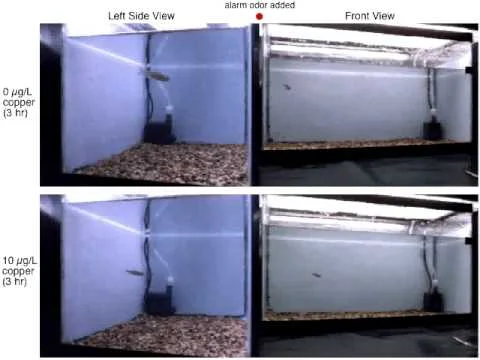
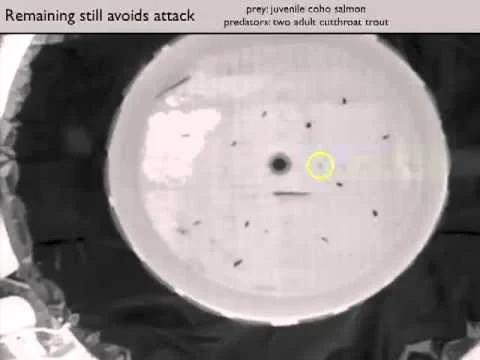
The team then demonstrated that copper-caused damage to the olfactory (smell) system actually made juvenile salmon more vulnerable to predators. Salmon attacked by predators release a smell from torn skin, which acts as an alarm signal for other salmon to evade attack. Salmon exposed to copper at levels expected during a storm event failed to respond to this alarm cue, causing higher rates of mortality in predator-prey encounters.

The scientists addressed several other natural resource management concerns, including the applicability of the new findings across salmon species and how different water conditions influence how much copper is available to injure the salmon's olfactory system.

The SeaDoc Society's Salish Sea Science Prize comes with a $2,000 cash prize. It is bestowed biennially to recognize a scientist or group of scientists whose work has resulted in the demonstrated improved health of fish and wildlife populations in the Salish Sea. It is given in recognition of, and to honor the spirit of the late Stephanie Wagner, who loved the region and its wildlife.

The SeaDoc Society is about people and science healing the sea. It funds and conducts marine science and uses science to improve management and conservation in the Salish Sea. It is a program of the Karen C. Drayer Wildlife Health Center, a center of excellence at the UC Davis School of Veterinary Medicine.

Killer whales to get personal health records

Southern Resident killer whales, currently numbering 84, can be individually identified and are some of the best-studied marine mammals in the world. Researchers regularly collect important health data on them (including photographs of skin disease and body condition, as well as samples of feces, breath, blubber and skin). We even know their family history. Unfortunately, we've never compiled the data into records that permit us to easily assess their health, until now.

Just as your family doctor shares medical information with specialists, the challenge is to organize that data so that each animal has its own health record, allowing researchers to track the health of both individuals and the population as a whole.

On March 28 and 29th, SeaDoc -- with collaborators from the National Marine Mammal Foundation and NOAA Fisheries -- hosted killer whale health experts from aquariums, universities and non-profits from all over the US and Canada to design a record-keeping database and determine what metrics could be used to assess the health of individual animals. SeaDoc wildlife veterinarian and co-director of the UC Davis Gorilla Doctors program, Kirsten Gilardi, presented on decades of experience assessing the health of individual free-ranging endangered mountain gorillas.

Although it is a year or more out, researchers hope to eventually be able to provide annual hands-off checkups for killer whales.

This exciting project is supported by SeaDoc private donors, a matching grant from the Killer Whale Research and Conservation Program (National Fish and Wildlife Foundation and Sea World), and funding from NOAA Fisheries. Thank you SeaDoc donors for making this groundbreaking work possible.

Press Coverage:

This story was covered coast to coast and internationally, with more than 200 media outlets running the story. A sampling is below.


Banner photo: Killer whale. Photo courtesy of J. Gaydos.

New fault discovered in the Salish Sea

Devil's Mountain Fault

Seafloor mapping is a critical tool for understanding ocean habitats. As you can imagine, the seafloor is really hard for most people to see without mapping tools. But Dr. Gary Greene of SeaDoc's Tombolo mapping lab knows that seafloor mapping also has other merits, such as uncovering faults that could cause earthquakes.

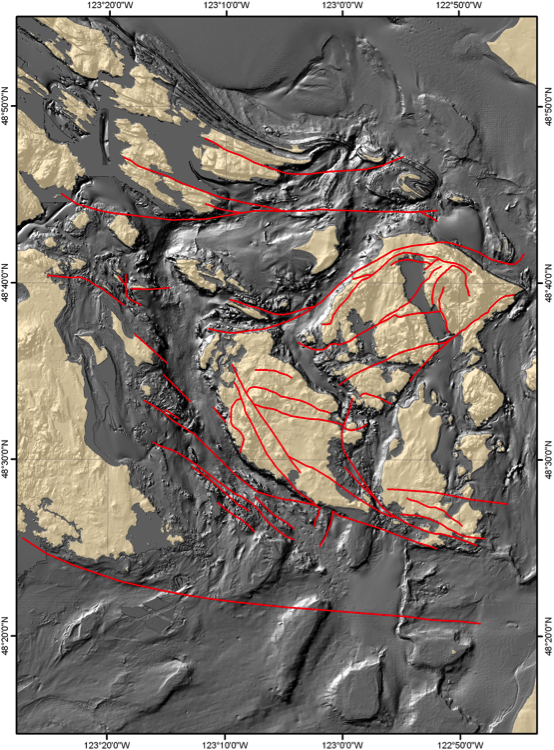
Dr. Greene and his Canadian collaborator Dr. Vaughn Barry recently revealed, in detail, a 125km-long series of faults that run from Washington to Victoria associated with the Devil's Mountain Fault Zone.

read the full publication

Read the press coverage from the CBC.

Check out this other image showing how many faults there are in San Juan County:

Faults in the San Juan Islands. Dr. Gary Greene

Faults in the San Juan Islands. Dr. Gary Greene


Banner photo: Devil’s Mountain Fault image. Courtesy of Dr. Gary Greene.

SeaDoc shifts paradigm for listing of endangered species

You may have heard the story about how SeaDoc worked with the Washington Department of Fish and Wildlife to write a scientific status review for Tufted Puffins. This ultimately helped to list the iconic seabird as Endangered in Washington State. What you might not know is that the partnership between SeaDoc and the Washington Department of Fish and Wildlife was a major paradigm-shift in the world of threatened and endangered species legislation. So much so that we knew we had to share it with other scientists, managers and conservation groups around the world.

While many outside groups petition government agencies to list animals, it is unusual that a group would actually assist in the scientific review process to determine if listing is warranted.

The scientists involved in the project—Thor Hanson, Gary Wiles, and Joe Gaydos—described their collaboration in the peer-reviewed journal, Biodiversity Conservation.

The goal? To help people around the world embrace a new way to move endangered species protection forward.

Funding is a huge roadblock to endangered species conservation. At the federal level in the United States, listed species receive only about 20% of the funds that would be needed to support full recovery.

And that's just for the implementation work. The scientific studies that lead to a decision on whether listing is warranted also are underfunded. Just like the feds, the 46 states like Washington that have endangered species programs also have funding problems.

In Washington between 1990 and 2014 there were 27 scientific status reports prepared. That's about one a year. But new species keep getting added to the list of candidates. So in 2014 there were still 112 species waiting to be evaluated. And of course some populations continue to decline while they wait for action.

SeaDoc's partnership with the Washington Department of Fish and Wildlife approached this problem from a unique angle. Because the funding problem for WDFW really came down to a lack of staff time, SeaDoc used privately-raised funds (your donations) to temporarily hire a scientist (Thor Hanson) to write the scientific status review for puffins.

And described in the paper, a key element of this collaboration was the commitment by all parties to keep advocacy out of the process. SeaDoc undertook the status review with the understanding that the science would speak for itself and there was no guarantee that the puffin would or would not be listed.

This model can be used around the world where limited resources are dramatically delaying listing decisions. By partnering with non-governmental organizations that are willing to support science-based investigations, governments can make progress on evaluating species at risk.

This model also shows that a small number of private citizens can make financial investments that shave years off of the listing process and ultimately speeding up the recovery process.


Banner photo courtesy of Brian Guzzetti/Alaska Stock.

Eric Anderson joins SeaDoc Science Advisors

E_Anderson-head-shot-710-888.jpg

Bird expert and ecologist Dr. Eric Anderson has joined SeaDoc's Science Advisors, replacing bird expert David Nysewander, who served as an advisor since 2005.

The SeaDoc Society’s Science Advisors provide counsel on research priorities and scientific issues relating to the health of marine wildlife and the marine ecosystem in the Pacific Northwest and North American Pacific Ocean. They also provide critical review of proposals submitted to the SeaDoc Society Competitive Grants program. Members are appointed in recognition of the prominence they have achieved in their careers, and for their efforts on behalf of ecosystem health in the Salish Sea region

Dr. Anderson comes to the position with not only a strong background in science, but also with prior SeaDoc experience: through our competitive grants program SeaDoc helped support Eric's PhD research on scoters.

Anderson currently teaches at the BC Institute of Technology and is a research scientist at Friday Harbor Laboratories.

Some of Anderson's SeaDoc-supported work in the Salish Sea includes:

Anderson received his undergraduate degree at the University of Puget Sound and his MS and PhD at the University of Wyoming. He is a passionate outdoor explorer who has kayaked around the Hornstrandir peninsula of Iceland, canoed the Yukon-Charley Rivers National Preserve, and mountain-biked the Kokopelli Trail from Fruita, CO to Moab, UT. Welcome, Eric!

Nysewander-340-322.jpg

Outgoing SeaDoc Science Advisor David Nysewander is a retired marine bird biologist who spent his career working on marine birds in Alaska (with the U.S. Fish and Wildlife Service) and in Washington (with the Washington Department of Fish and Wildlife).

Thank you, Dave, for a decade of helping guide the SeaDoc Society's scientific efforts.

For a complete list of SeaDoc's Science Advisors, visit our Team page.

SeaDoc quoted in Hakai Magazine piece on whale watching

SeaDoc was mentioned in a recent article in Hakai Magazine (a magazine about Coastal Science and Societies). The story, based on a recent Soundwatch report describing whale watching infractions in 2015, refers to the science behind the whale watch guidelines and the transboundary (US / Canadian) challenges.

Joe Gaydos, the chief scientist with the SeaDoc Society in the San Juan Islands, says bad whale-watching behavior is concerning as there are a number of ways infringing boats can hurt whales. Engine noise makes it more difficult for whales to communicate and hunt; propellers are a collision risk; and whales may inhale vessel exhaust fumes when they come up to breathe. Whales also alter their swimming to avoid boats, a particular problem for nursing females. “We don’t want to give moms that are lactating extra reason to expend energy,” says Gaydos.

Read the full article at the Hakai Magazine website.

Four new faces on the SeaDoc board of directors

We're excited to announce that four new board members have joined the SeaDoc Society board of directors, replacing four long-time members who have rotated off.

janice-108-1491.jpg

Janice D’Amato recently retired from PACCAR, Inc., one of the largest manufacturers of medium- and heavy-duty trucks in the world, where she served as a Senior Attorney and Corporate Secretary. Janice now devotes more time to the local community and currently serves as a board member of School's Out Washington, an organization that provides training and support for after school programs. Fun fact: Janice was off the grid in Argentina when we asked for a fun fact!

ashley-108-1451.jpg

Ashley Ebbeler is formerly the Gift Planning Marketing and Communications Project Manger for The Nature Conservancy, where she focused on marketing legacy giving and developing stewardship publications for Conservancy donors. She has recently obtained a Masters of Environmental Management and is currently pursing a Masters of Business Administration. Living just outside Washington, D.C., Ashley is extremely involved in her community as the Director of the Riverdale Park Sustainability Committee and as a Board Member for the Riverdale Park Farmers Market. Ashley is looking forward to calling the San Juan Islands home soon. Fun fact: Ashley's first flying lesson was aerial acrobatics.

marguerite-108-1391.jpg

Dr. Marguerite Pappaioanou (Captain, retired, US Public Health Service) is an epidemiologist and public health veterinarian with over 30 years’ experience working in global-, public-, and one-health. She currently serves as the Centers for Disease Control and Prevention (CDC) liaison to the Food and Drug Administration for Food Safety. At CDC her work has focused on global emerging infectious and zoonotic disease surveillance, and evidence-based prevention and control programs. Fun facts: Marguerite has traveled to all seven continents and served for many years as the trail veterinarian for the Kuskokwim 300, a 300-mile sled dog race out of Bethel, Alaska.

jo-seel-108-1551.jpg

Jo Seel recently transitioned from a 25-year career in commercial banking and maritime lending to join the not-for-profit world. Jo brings both financial and fundraising experience to the Board. She's had a unique business career combining finance and adventure with stints in Taipei, Taiwan and Vladivostok, Russia. Fun fact: Jo is an avid backpacker and downhill skier, she sees the mountains and the sea as being inter-connected and is passionate about making sure they both remain healthy and viable.

When a seal births a two-head pup, should we be concerned?

Photo by Jeff Bradley / Burke Museum

Photo by Jeff Bradley / Burke Museum

You bet!

In the summer of 2013, Orcas Island resident Dennis King spotted a dead harbor seal on the beach near his house in Olga. He called the San Juan County Marine Mammal Stranding Network, and volunteers responded and collected the carcass for further study. Little did he know how interesting his discovery would turn out to be.

When SeaDoc interns Kay Wicinas and Liz Anderson examined the carcass they were surprised to find that the mother had died while trying to give birth. The following day when SeaDoc, The Whale Museum, and the Marine Mammal Stranding Network performed a complete necropsy, or animal autopsy, they discovered that this was no ordinary dystocia. A conjoined fetal twin that was too big to be birthed was the real cause of the problem.

Twins are very rare in marine mammals, and conjoined twins are obviously even more rare, about like hens teeth. This appears to be the first documented case of equally-developed conjoined twins in harbor seals.

Harbor seals are an important species for scientific study because they serve as good indicators of ecosystem health. They are in residence year-round and are high level predators, so studying them can help us discover emerging biotoxins or contaminants.

Because high levels of contaminants or naturally occurring toxins have been shown to cause genetic defects in domestic animals, the mother and twins were tested for a long list of known contaminants and toxins. Fortunately nothing was discovered, suggesting that these conjoined twins likely were caused by an inborn error of cellular division and not something in the environment.

The need to unravel such mysteries is one of many reasons SeaDoc puts such a high priority on investigating wildlife diseases.

Read the peer-reviewed paper by Jennifer Olson, et al., recently published in the Journal of Wildlife Diseases

(If you don't have a subscription to that journal, email us at seadoc@seadocsociety.org and we'll send you a copy of the paper.)

Join the Marine Mammal Stranding Network

If you’re interested in responding to stranded marine mammals in the San Juan Islands, please contact Jennifer Olson at The Whale Museum in Friday Harbor. (360) 472-1852 or jennifer@whalemuseum.org. Trainings happen in late Spring.

Keep your distance

Remember that the Marine Mammal Protection Act requires you to stay 100 yards away from marine mammals. If you spot a stranded marine mammal, dead or alive, please call the Stranding Hotline to report it. Their number is 1-800-562-8832.

Sand Lance found hiding in existing salmon data

NOAA_Sand-Lance-1917-mandy-lindeberg-710-533.jpg

Recently a team of scientists from the Northwest Straits Commission and the SeaDoc Society took a deep dive into decades of data collected by scientists looking for juvenile salmon in the nearshore. But they weren't interested in salmon. Instead, Jamey Selleck, Caroline Gibson, Suzanne Shull and SeaDoc's Joe Gaydos were interested in Pacific Sand Lance, which are often caught by accident during salmon sampling.

They discovered a treasure trove of data about these important fish, which are vital to the ecosystem because they turn plankton into fat for other animals higher up the food web.

Within the salmon data, they analyzed findings from over 15,000 beach seines that captured Sand Lance, spanning 1,630 sites along 320 miles of shoreline.

The results of the study were published in the scientific journal Northwestern Naturalist.

The study showed that while Sand Lance can be found almost everywhere in the Salish Sea, abundance varies during the year.

Here's the abstract:

Pacific Sand Lance (Ammodytes personatus) are energy-rich schooling fish that are thought to be important drivers of marine food webs in Alaska (USA) and British Columbia (Canada). Despite a number of studies characterizing their distribution and habitat use in Alaska and British Columbia, surprisingly little is known about population attributes in the Salish Sea. We compiled and analyzed 15,192 records collected from 1630 sites, primarily by beach seine or tow net in nearshore shallow areas between 1970 and 2009, to determine Sand Lance spatial and seasonal distribution in the inland waters of Washington State. Sand Lance were present along 78% of the shoreline that was sampled and were captured during every month of the year. The maximum number captured in individual nets increased between May and August. Fork length ranged from 1.7 to 19.0 cm and average fork length did not vary by month. The shortest minimum fork lengths were documented during April through July, likely representing annual recruits, but size at maturity is not known for the local population. Their widespread distribution throughout the region and peak abundance during summer suggests that they are an important potential prey source and could be a driver of marine food webs in this region.

Read the full study here. If you are unable to access the publication, send us an e-mail at seadoc@seadocsociety.org.

Going viral: Concerns rise over potential impacts of disease on the ecosystem

Salish Sea Currents, the magazine of the Encyclopedia of Puget Sound, did a feature story on the role of disease in the Salish Sea.

From orcas to starfish to humans, disease affects every living creature in the ecosystem. Scientists are increasingly alarmed by its potential to devastate already compromised populations of species in Puget Sound.

SeaDoc's Joe Gaydos (also the Birds and Mammals topic editor for the Encyclopedia) is quoted. "The crazy thing about disease is that it isn’t really on people’s radar. It is a smoldering factor in our environment, but one that can break out at any time."

See the full article by Christopher Dunagan.

The article was also featured on the front page of the Kitsap Sun.

Canadian / US failure of collaboration puts Salish Sea at risk

“We need to deal with the impacts of new energy projects at the level of the ecosystem, not just project to project," says wildlife veterinarian Dr. Joe Gaydos, lead author of a new paper analyzing the combined threats posed by six fossil fuel transportation projects in the Salish Sea.

The new study by SeaDoc and the Swinomish Tribe was recently published in the international journal PLoS ONE.

What did they find? Canada and the US need to do a better job collaborating on Salish Sea issues.

The study evaluated the threats posed by each project to 50 species that are important to the Coast Salish people. These include endangered humpback and killer whales, and key food species including seaducks, salmon, clams, and Dungeness crabs.

Gaydos says, “When you look at these projects cumulatively, they have a high possibility of affecting the Coast Salish and everybody else. The environmental impact statements aren’t looking at the threats collectively.”

Although the Salish Sea is an integrated ecosystem, it is shared by Washington, British Columbia, and indigenous Coast Salish governments. When US and Canadian governmental bodies evaluate proposed developments, they rarely take into account projects occurring outside of their jurisdictions.

Coast Salish have long looked at the ecosystem as a whole. “We walk as one with our resources, as they are the spirit within us,” said First Nation Summit Co-Chair and Chemainus First Nation member Ray Harris. “Each day is a blessing when we see our scientists and traditional knowledge teachers sharing and incorporating one another’s information. We see the removal of barriers happening all over the Salish Sea, and this respect of one another allows us to take care of this beautiful place we all call home.”

Rectifying the problem

A solution is within reach. Brian Cladoosby, Swinomish Chairman, says, “For more than 150 years, we have lived with the destruction of our resources and environment by a pollution-based economy. It is time for a change, and this can only happen if we work together.”

This study makes it clear that managers need to establish a mechanism for addressing transboundary threats.

Transboundary ecosystems like the Salish Sea, which exist around the world, are vulnerable to cumulative pressures when there is no mechanism for collaborative decision-making.

In the Salish Sea, there is no governing body that requires multiple proposed projects be evaluated for their cumulative impact. As noted in the paper, “This is a failure in coastal ecosystem management that stands to have a direct impact on the Coast Salish and likely on most of the 7 million other people that also depend on this ecosystem.”

Six years ago the Salish Sea was named. It is now time for the governing bodies responsible for the Salish Sea to create an effective system for evaluating threats across the entire ecosystem.

Read the full study at PLoS ONE.

News coverage is here.

For more background, see an article by Lynda Mapes at the Seattle Times, Northwest tribes unite against giant coal, oil projects.


Banner photo: bulk carrier and killer whales share the Strait of Juan de Fuca southeast of Victoria, British Columbia. Photo courtesy of Jim Maya, Maya’s Images.

New study from Argentina: Gulls are feasting on living whales

The UC Davis School of Veterinary Medicine and Karen C. Drayer Wildlife Health Center do cutting-edge work all around the world. A recent example from Argentina reveals that Kelp gulls are wounding living Southern right whales at an ever-increasing frequency.

UC Davis Wildlife Veterinarian Dr. Marcela Uhart co-authored the study that tracked wounds on the backs of living and dead southern right whales at their calving grounds in Argentina. The gulls eat skin and blubber from the whales' backs when they surface to breathe. For the gulls this is a high-energy source of food, easily accessible in the winter months.

Since gull attacks were first observed in the 1970s, lesions have increased every decade until they were visible in almost every animal by the 2000s. Over time, the actual number of lesions on individual animals shifted from mothers to calves.

"Mothers, who return to the birthing grounds every three years or so, have learned to protect themselves by resting with their heads and tails up and the rest of their body submerged," said Dr. Uhart. "Calves have not learned this and are at greater risk for attack."

In recent years calf mortality has been unexpectedly high at Peninsula Valdés, which is the only place in the world where this kind of gull harassment of right whales has occurred. But it is not yet clear if or to what extent these attacks are contributing to calf deaths. The study does suggest, however, that the attacks are costing the calves precious energy, as well as causing pain and discomfort.

For calves, avoidance behaviors include swimming faster and surfacing to breathe without exposing their backs. Both of these behaviors mean they are investing more energy in avoidance and less in playing, resting, and nursing. Wound healing also diverts essential resources needed for normal growing and development.

Not mentioned in the paper is the inappropriate handling of fishing and urban waste by regional municipalities and fisheries, which are thought to be responsible for artificially increasing the gull population over the past 45 years.

Want to dive deeper into this issue? View the publication at PLOS ONE (open access).


Banner photo: kelp gull pecking skin and blubber from southern right whale. Photo courtesy of Mariano Sironi, Instituto de Conservación de Ballenas.

Case study: how SeaDoc makes a difference

Forage Fish of the Salish Sea from Friends of Skagit Beaches on Vimeo.

Our goal is to ensure that SeaDoc science makes a difference, but does it? And if so, how? Check out this sweet new video on forage fish (above) by Friends of Skagit Beaches and the Department of Ecology.

We're pleased Joe Gaydos gets a cameo talking about how important forage fish are, but we really want you to check out what Senator Rolfes has to say. She sponsored forage fish legislation in 2015 that funded two important studies to help the Department of Fish and Wildlife implement their forage fish management plan from the1990s, which was conceptually way ahead of its time but never adequately funded.

In the video, Senator Rolfes says she was inspired to take action by an op-ed in the Seattle Times that directly linked the decline in marine birds to the decline in forage fish.

This op-ed drew heavily on another article, this one by Craig Welch, that focused on SeaDoc's groundbreaking marine bird population study, in which SeaDoc's Dr. Ignacio Vilchis and collaborators were able to show that diving birds that depend on forage fish were many times more likely to be in decline than other bird species.

While the course of events varies from case to case, the take home message here is that focused, well-targeted science, like that which SeaDoc promotes, does make a difference. It's also important to remember is that Dr. Vilchis' large and complex 2-year science project and publication was funded by a SeaDoc supporter's (Stephanie Wagner) legacy bequest.

So don't forget, SeaDoc science does make a difference and real credit for change belongs to the generous donors like you who make it possible.

Kirsten Gilardi receives Emil Dolensek Award

Kirsten Gilardi with silverback gorilla. Photo by Sandy Buckley.

At its annual meeting in October 2015, The American Association of Zoo Veterinarians awarded Dr. Kirsten Gilardi the Emil Dolensek Award. Some people have called this "The Nobel Prize in Medicine for Veterinarians," and we couldn't be more proud of Kirsten and her long list of accomplishments that made her so deserving of this award.

Kirsten earned her DVM from UC Davis in 1993 and was a veterinary resident and then veterinary fellow at the California National Primate Research Center. She then was one of the first veterinarians to achieve Board Certification by the American College of Zoological Medicine, with an emphasis on Wildlife Medicine.

Kirsten's work at the Karen C. Drayer Wildlife Health Center at UC Davis began in 1998 when she was instrumental in laying the foundation for California's now world-famous Oiled Wildlife Care Network. Her work included setting up facilities and helping create a model program for the statewide response to oiled wildlife emergencies.

In 2000, Kirsten took on the role of executive director for the SeaDoc Society, shaping the vision for what has evolved into a unique marine ecosystem health program. In just 15 years, this organization has become a key player in marine conservation in the Salish Sea, filling a glaring gap in the environmental sector – caring for the health of the wild animals, from shellfish to killer whales.

Since 2009, Kirsten has been the Co-Director of Gorilla Doctors, which is a partnership between UC Davis and the Mountain Gorilla Veterinary Project. Gorilla Doctors' efforts ensure the long-term health and survival of critically endangered wild eastern gorillas and the human and animal communities that share their habitat. The 15 Gorilla Doctors on the ground in Africa, all but one of whom are African veterinarians, monitor the health of and provide life saving treatment for injured and ill eastern gorillas living in Rwanda, Uganda, and the Democratic Republic of Congo (DRC). The team works hard to conserve eastern gorillas one gorilla at a time, and has become an international model of One Health in action.

Under Kirsten's leadership, Gorilla Doctors also manages the USAID Emerging Pandemic Threat PREDICT program in Uganda and Rwanda, through which laboratory capacity in both countries has been vastly improved, and a number of newly discovered viruses have been described.

As an offshoot of her work at SeaDoc, Kirsten founded and has led a program to remove derelict fishing gear, which entangles and injures crabs, birds, and whales, from the west coast of the United States. In the crab fishing fleet, this program is on its way to become a self-sustaining program run by the fishermen themselves.

In addition to all these activities, Kirsten is a researcher, teacher and mentor.

In 2014 she was named Co-Director of the Karen C. Drayer Wildlife Health Center, where she leads a large team dedicated to solving wildlife and conservation problems using a One Health perspective.

Kirsten has had a truly positive impact on wildlife around the world, and we're proud of her recognition by the American Association of Zoo Veterinarians.

Fishes of the Salish Sea

Dragons and Vipers and Opahs, Oh My!

Sailfin sculpin by Joseph R. Tomelleri

The Salish Sea's famed salmon have a lot of interesting company beneath the surface. From the gumdrop-size spiny lumpsucker to the world's second-largest fish, the basking shark, we've long known our inland sea was home to an amazing range of fish species. However, it wasn't until an exhaustive new SeaDoc-funded study set out to document every species of local fish that we fully understood the diversity of these rich waters.

The study, by Ted Pietsch and Jay Orr, revealed more than three dozen fish species not previously known to inhabit the Salish Sea, adding such notables as the leopard shark, Pacific hagfish and lowcrest hatchetfish, and raising the number of local fish species to 253. Another "new" native, the opah, is a freckled orbicular oddity and one of the only known warm-blooded fish.

Beyond the wonder of knowing we share our Salish Sea with the opah and other fantastical creatures like the ribbonfish and daggertooth, and that our abyssal depths twinkle with such bioluminescent stars as the flashlight fish and viperfish, we now have a definitive list that allows us to more accurately choose which fishes best serve as indicator species — the canaries in the aquatic coal mine — to track the health of the entire ecosystem. It will also tell us when invasive species invade, and if any native fishes disappear.

This important paper proves once again that when it comes to restoring the Salish Sea, good science and SeaDoc donors really count.

Download the paper

Fishes of the Salish Sea is an open-access publication of NOAA, available for download from the SeaDoc website or from the NOAA website.

The PDF includes about a dozen incredible drawings of local fish.

read the full publication

More details about the study

This study is part of a long-term effort by SeaDoc to document the fish and wildlife that inhabit the Salish Sea.

In 2011, Joe Gaydos and Scott Pearson published "Birds and Mammals that Depend on the Salish Sea: A Compilation" in Northwestern Naturalist. That paper established a baseline list of species, and has been cited numerous times in both peer-reviewed and technical papers.

Now we have a complete list of fishes. At some point we hope to take on the daunting task of cataloging the 3,000+ species of macro-invertebrates.

Knowing which species use an ecosystem and how they make their living is fundamental to restoring it.

Why is this so important? With this list, scientists will be able to document the occurrence of new species and the disappearance of existing ones. The list will be a key baseline for Salish Sea recovery. At the same time it will help scientists select particular species as indicators of ecosystem health, and it will provide a basis for identifying the mechanisms responsible for marine fish declines.

Funded by private citizens

Like many SeaDoc projects, this one was funded by individuals with a commitment to the health of the Salish Sea. Thanks to our forward-thinking donors for understanding the importance of this effort and making it possible.

Blacktail snailfish by Joseph R. Tomelleri

Blacktail snailfish by Joseph R. Tomelleri

List of fishes featured in Salish Sea news outlets

The new list of Fishes of the Salish Sea published by Ted Pietsch and Jay Orr, and funded by the SeaDoc Society, has been featured in several news outlets around the Salish Sea. The Victoria Times Colonist noted in particular that Pietsch and Orr used the Royal B.C. Museum as one of their sources.

The Skagit Valley Herald focused on some of the species that inhabit shorelines in Skagit County, like red Irish lords, queenfish, and smallhead eelpout.

And then The Stranger picked it up. Which fish will inhabit your nightmares? Which one looks like Keith Haring painted it? You'll have to read the article to find out...

The paper has also been written up in phys.org, Science Daily, the Parksville Qualicum Beach News, the Fish Site, Nature World News, the Journal of the San Juans, and the Vancouver Sun, among others.

In December, reporter Jessi Loerch wrote about the paper in the Everett Herald. She focused particularly on the striking illustrations, and interviewed illustrator Joseph Tomelleri about his drawing process.