SeaDoc/REEF subtidal monitoring project 2015

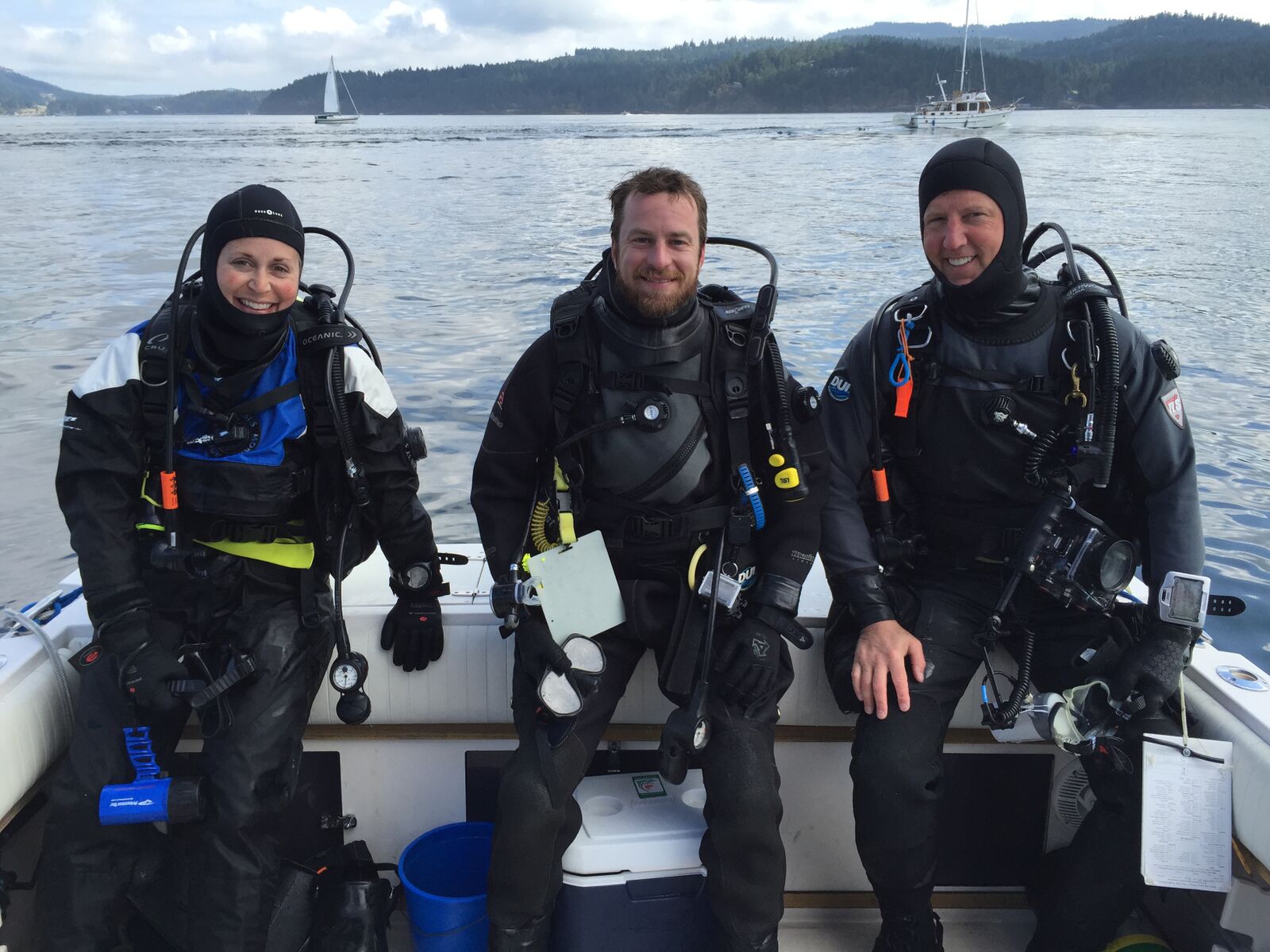
Are the sea stars coming back? That's the question most people ask when they learn that SeaDoc just completed another 100 survey dives in our multi-year collaboration with REEF.

Video of diver doing survey (10 seconds)

Each fall, trained citizen scientist SCUBA divers conduct 100 surveys of fish and invertebrates at locations throughout the San Juan Islands. The results are almost immediately accessible on the national REEF database. For example, here's a link to species sighted at Bell Island West between 2013 and 2015 on the REEF.org website. REEF's database is used by citizens and scientists the world over.

Video of rockfish observed during dive (10 seconds)

While we just completed this year's series of dives, and the data hasn't been analyzed yet, we can tell you a few things:

  • Divers look for 4 different species of sea stars. They saw healthy specimens of vermillion, blood, and leather stars.
  • They saw no sunflower sea stars. Before the sea star die-off it would have been typical to see 20-30 sunflower sea stars on a single survey dive.
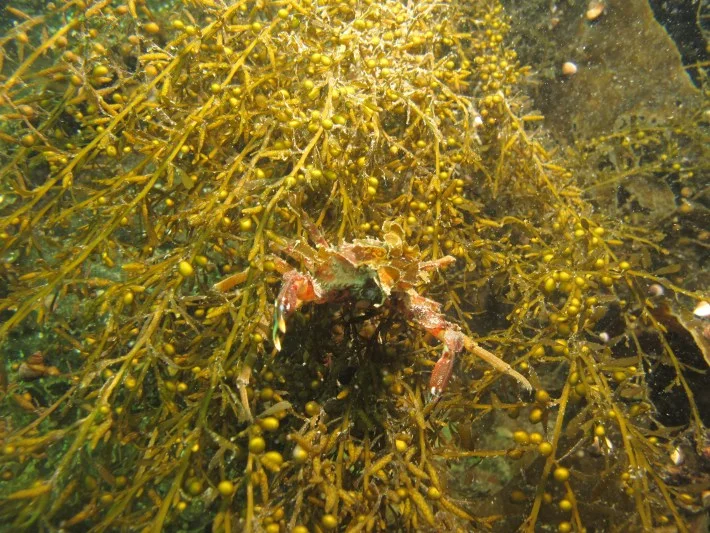
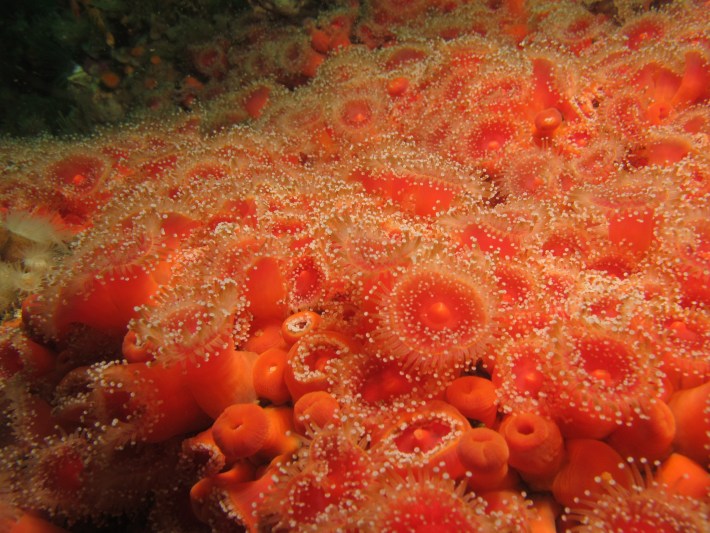
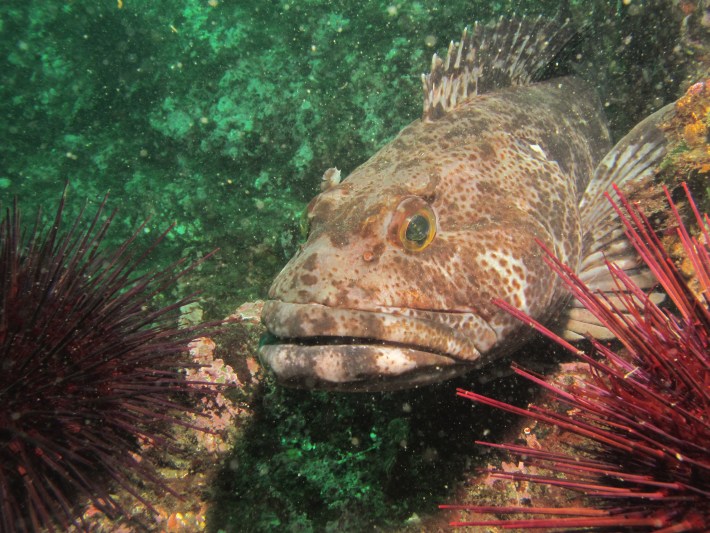
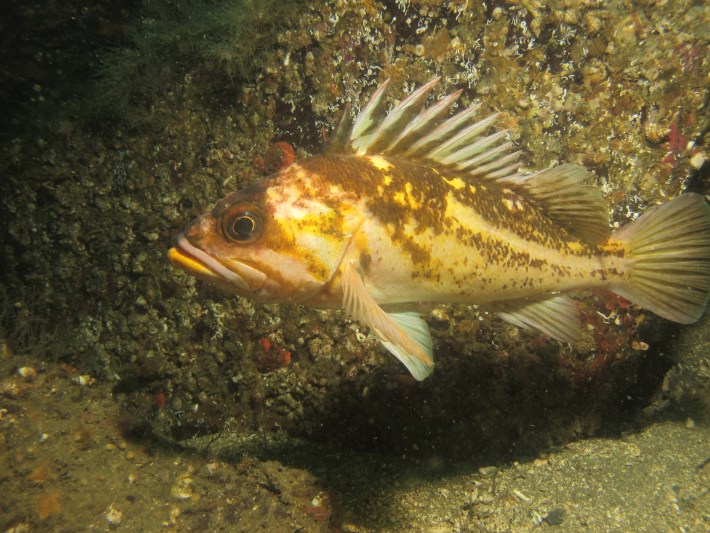
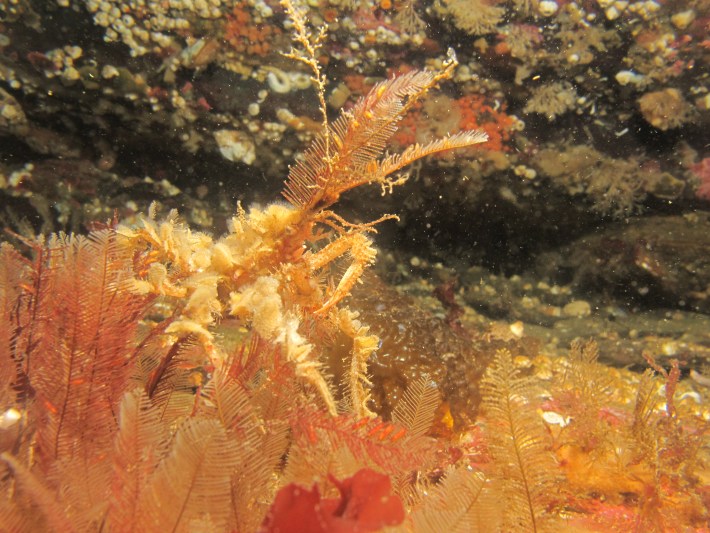
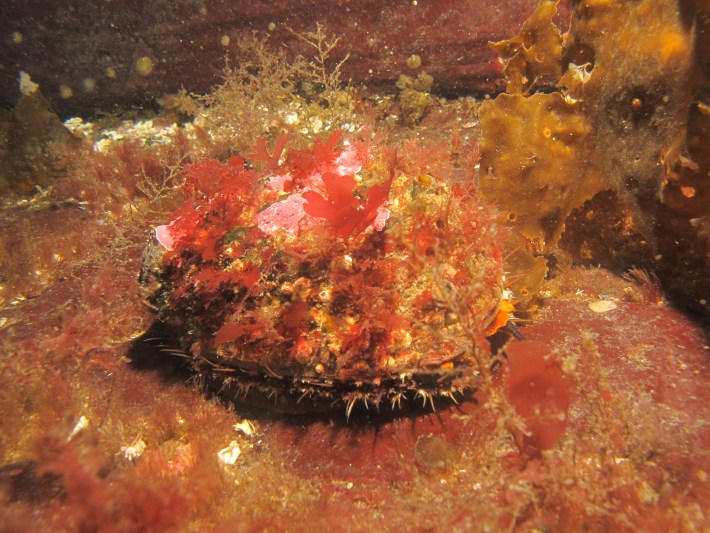
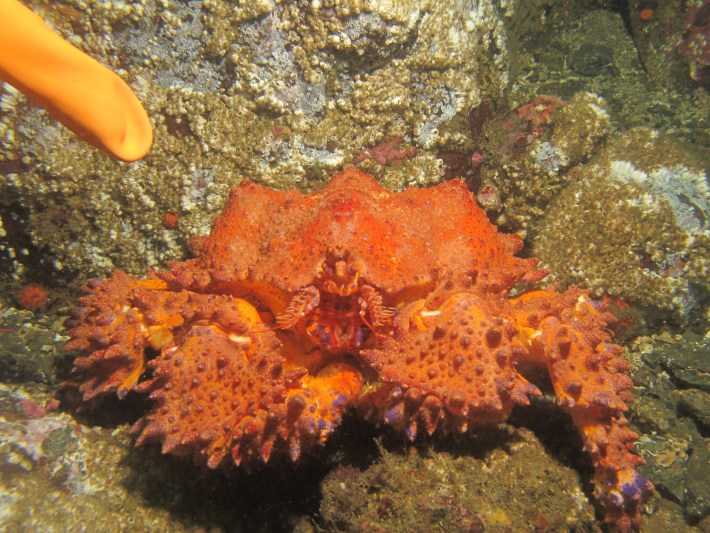
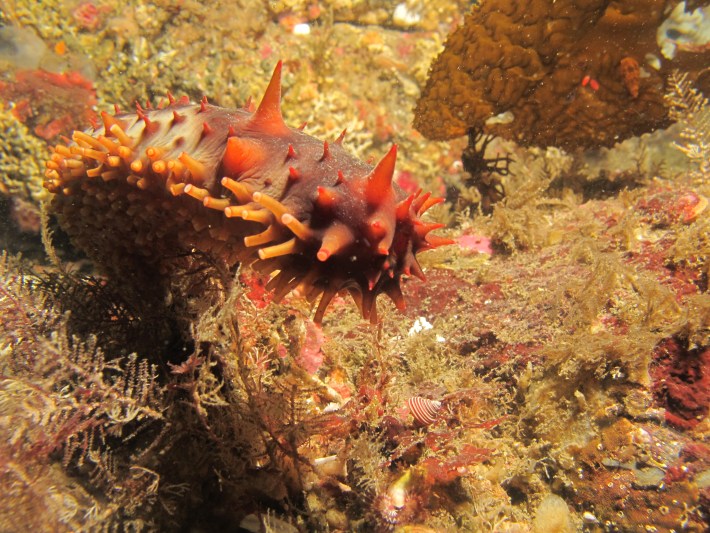
  • Divers observed many beautiful fish and invertebrates, some of which are pictured below.
  • This is a long-term project, and the real payoff will come after many more years of surveys.

This project is made possible thanks to collaborations with REEF, numerous volunteer divers and of course the SeaDoc donors who got the program started, including Jeanne Luce, Steve Alboucq, Loren Ceder, Chuck Curry & Molly Davenport, Martha Wyckoff in honor of Lee Rolfe, and one other anonymous donor. Major support for this year's dives came from the Seattle Aquarium. Thank you!

This year's divers include Laurel LaFever, Janna Nichols, David Todd, Joe Gaydos, Todd Cliff, Carol Cline, Gregg Cline, Josh Sera, Rhoda Green, Margaret Bangs, Randall Tyle, Taylor Frierson, Chuck Curry, Phil Green, and Jen Olson. And special thanks to Friday Harbor Labs for housing the volunteer divers and to Bandito Charters for doing such a great job of running the charter boat.
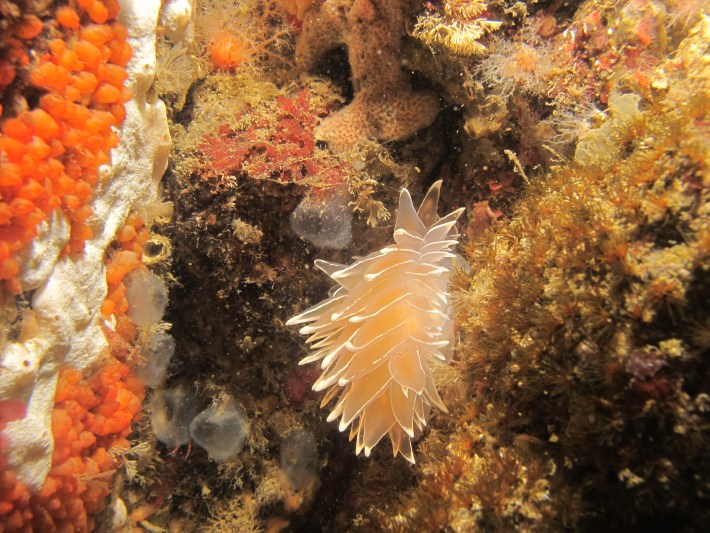
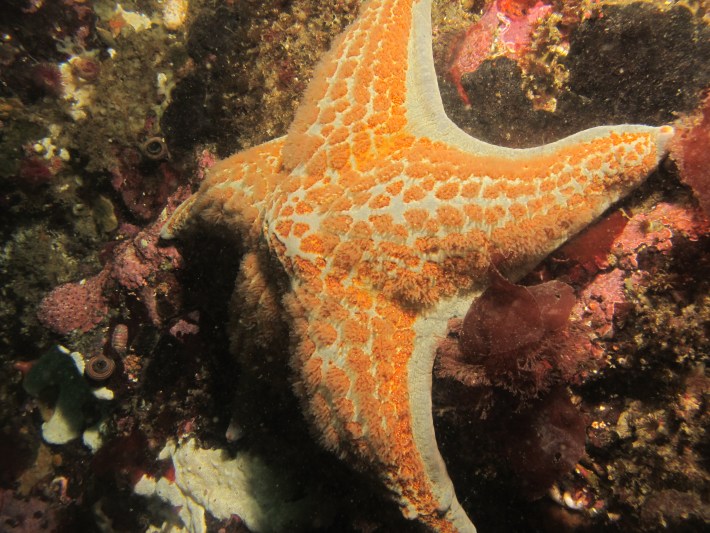
All photos by J. Gaydos.

Wooden hats for harbor seals?

Hat tag on harbor seal pup. Photo by L. Zatorski Clarke

Hat tag on harbor seal pup. Photo by L. Zatorski Clarke

Each summer SeaDoc and The Whale Museum hire interns to help out with the San Juan County Marine Mammal Stranding Network. Part of their job is to check out abandoned harbor seal pups to see if they need to be taken into rehabilitation. We want to know if a particular pup has been seen before and if it has moved. Simple hat tags allow the seals to be identified from a distance. In the past, the San Juan County Marine Mammal Stranding Network has used standard plastic hat tags similar to those that are used on seals around the world. But what happens when these plastic tags fall off as the animal molts? Yes, that’s right: they become just one more piece of plastic marine debris.

This summer SeaDoc / Stranding Network intern Lauren Zatorski Clarke, an Oregon State University veterinary student, collaborated with the Marine Mammal Center in Sausalito, CA, to come up with a more environmentally-friendly way of tagging harbor seal pups.

Lauren engineered a replacement out of cedar. The blocks are cut, then sanded to remove sharp edges and the bottoms are scored to help them adhere to the pups’ fur when glued on.

Cedar hat tags showing inset lettering and scoring pattern on bottom

Cedar hat tags showing inset lettering and scoring pattern on bottom

Preliminary field tests and tests on tagged animals in rehabilitation at Wolf Hollow showed that the tags stayed on the seal's heads and the lettering, done with a combination of engraving and a laundry marker, persisted and allowed identification at a distance.

When the pups molt next year, the tags will fall off. And because they are made from cedar, they will degrade naturally.

The information we get from re-sighting stranded and rehabilitated seals helps us understand harbor seal stranding patterns and rehabilitation success.

If you see a tagged seal in the water our on land, please report it to the San Juan County Marine Mammal Stranding Network (1-800-562-8832) and include the identifying letter and number in your message. Just remember to stay 100 yards away and use your binoculars. Thanks for your help!

The San Juan Islander covered our change from plastic hat tags to wooden hat tags for baby harbor seals.

Searching for young of the year rockfish

When you have fish that can live from 80 to 200 years, depending on the species, recovery can be a slow process.

That’s the case with some of the 27 different rockfish (Sebastes spp.) in the Salish Sea. Many species were over-harvested and are now in need of recovery.

One important strategy is protecting the old females who produce copious young. But rockfish don't birth a big crop of babies every year. (Yes, rockfish give birth to live baby fish.) Instead they seem to have periodic "bonus" years when numerous rockfish babies are born. As a result, it is really important to know when these massive birth years of young rockfish occur and understand the type of habitats those juvenile fish need to survive.

SeaDoc is working with the Washington Department of Fish and Wildlife, REEF, and others to help NOAA design a citizen-driven project where SCUBA divers can collect data to help us learn more about newborn rockfish, known as "young of the year."

Last month, NOAA project lead Dr. Adam Obaza came up to the San Juans to dive with SeaDoc to test out the new dive protocol. Joe Gaydos, Dr. Obaza, and Jen Olson dove in kelp forests, eelgrass, flat muddy bottom sites and rocky reef sites to look for young rockfish and test out the survey methodology.

Jen Olson, Dr. Adam Obaza & Dr. Joe Gaydos

Jen Olson, Dr. Adam Obaza & Dr. Joe Gaydos

Young rockfish are rare, but we did manage to find one young of the year rockfish - a baby Copper rockfish hanging out in some Laminaria sp. kelp near a rocky shore. As things are with science sometimes, it was in the last few minutes of the last dive of the weekend.

We will keep you posted as NOAA rolls out this volunteer SCUBA opportunity in case you or friends want to be involved.


Banner photo: young of the year Copper rockfish (less than 5cm). Courtesy of Janna Nichols.

SCUBA Divers: help us understand the economic impact of recreational diving in Washington State

The SeaDoc Society is interested in better understanding the values and perspectives of SCUBA in Washington State and the economic impacts it provides.

take the survey

While diving conditions may not resemble those of the tropics, Washington State provides some of the most spectacular diving in the United States. The flora and fauna and seafloor topography of this area are sensational.

However, there is little, if any, information regarding the economic impacts that this recreational sector provides the state of Washington.

This survey is designed to ask pertinent questions needed to characterize the role of SCUBA in Puget Sound to the Washington State economy.

The information generated from this survey will help inform effective coastal and marine resource management and policy decision making. For purposes of this survey, the area of interest is the inland waters of Washington State from Cape Flattery to Olympia including the San Juan Islands, Point Roberts and associated waters.

Information is requested for the year 2014. If you dove in Puget Sound in 2014, please consider filling out the survey.

This work is funded by private donations to the SeaDoc Society.

take the survey
pugetsoundmapreef.jpg

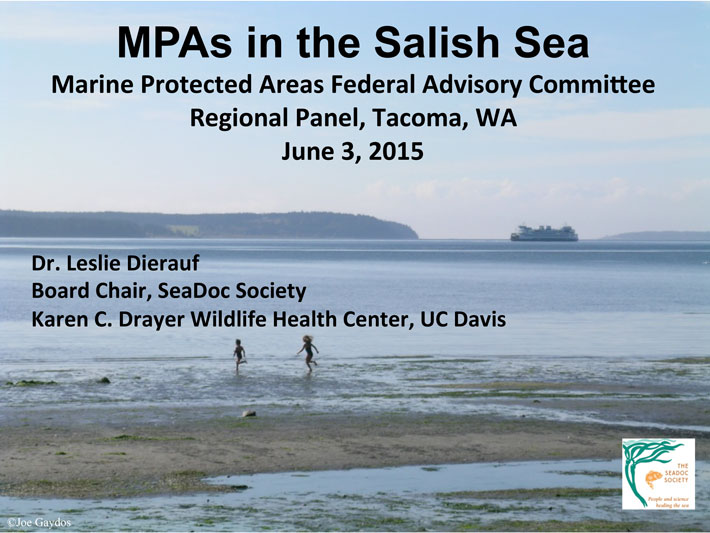
SeaDoc presents to Federal Marine Protected Areas Committee

MPA-panel-june2015.jpg

On June 3, 2015, in Tacoma, Washington, SeaDoc Society Board Chair Dr. Leslie Dierauf shared the mission, goals, and achievements of SeaDoc’s Salish Sea program with the U. S. Federal Advisory Committee on Marine Protected Areas at its annual meeting. Comprised of citizens with diverse marine environmental expertise from private and public sectors, the 20-person advisory committee was chartered by presidential Executive Order in 2000 to advise the Secretaries of Interior and Commerce on issues concerning a national system of marine protected areas and other matters relating to place-based ocean stewardship.

The committee’s current charge includes providing advice on ecological connectivity and on sustainable external funding opportunities.

The SeaDoc Society’s experiences provided models of both private funding and of translating ecological science on connectivity into private and public policies.

Improving ocean health is a team endeavor. No single organization, agency, or even nation can effectively ensure ocean health alone. Nevertheless, small groups of dedicated people working cooperatively can positively influence conditions for ocean wildlife and improve efforts to sustain healthy oceans.

WA State voter Initiative No. 1401

We at SeaDoc have spent some time studying Washington State's proposed voter Initiative, Measure No. 1401. This Initiative is designed to increase Washington State's capacity to prosecute people for the intrastate trafficking of endangered species parts. There is already a federal mechanism for doing this, but this Initiative is proposed to strengthen our State's ability to address this issue.

SeaDoc took the time to look at this proposed voter Initiative (signatures are currently being collected to put it on the fall ballot) because multiple species of marine turtles, sharks and rays are included and we thought the SeaDoc family might have questions about the science backing the Initiative.

Like the elephant and rhinoceros, marine turtles, sharks and rays are species that are also being illegally harvested. Their illegal harvest and trafficking are playing a large role in the decimation of these populations. SeaDoc is not an advocacy group, nor do we lobby or take positions on policies, but we want you to know that from a scientific perspective, this Initiative works to address a real threat to marine turtles, sharks and rays. Species included are those that are currently listed in Appendix I or II of the Convention on International Trade of Endangered Species (CITES) or are listed as critically endangered, endangered or vulnerable on the IUCN Red list of threatened species. While probably variable in degree of importance depending on the species, the illegal capture of these animals and sale of their parts for jewelry, food (like shark fin soup), or perceived medicinal purposes is a real threat to the long-term viability of their populations.

One local example of an affected species is the Basking shark. These magnificent plankton-eating sharks were once common in the Salish Sea, but were tragically extirpated by a targeted fishery. Recovery has been slow. On the international market, by-catch has been a problem for Basking sharks, but shark finning also has hindered recovery, especially when large "trophy fins" can command as much as $57,000 US (Clark, S., 2004, TRAFFIC, East Asia).

Click this link to read the entire initiative.

For more information on this Initiative, please see the following websites:


Banner photo: Leatherback sea turtle (Dermochelys coriacea). Courtesy of Alastair Rae via Flickr CC.

Coverage of Washington Department of Wildlife Citizen Award

The SeaDoc Society received a 2015 Citizen Award from the Washington Department of Fish and Wildlife. From the press release:

Another organization honored during this year's ceremony was the SeaDoc Society, a program of the Karen C. Drayer Wildlife Health Center at the UC Davis School of Veterinary Medicine.

Headquartered on Orcas Island in the San Juan Islands, SeaDoc was recognized for efforts to protect Washington's salt-water habitats and wildlife. Its work in Washington includes data gathering, mapping and analysis on issues such as derelict fishing gear, marine bird population declines, orca whale disease, forage fish spawning areas and the status of tufted puffins.

"It's difficult to pare down a short list of the important contributions SeaDoc has made in working with the department," said Eric Gardner, WDFW wildlife program deputy assistant director. "They have been active, productive contributors on a surprising range of topics in support of Washington's marine wildlife and coastal ecosystems."

The award was covered in many news outlets, ranging from The Olympian to AmmoLand Shooting Sports News.

SeaDoc's Jen Renzullo quoted in LA Times article on whale entanglements

SeaDoc's Jen Renzullo, who works on derelict fishing gear programs in California, was quoted in a Los Angeles Times article about the record number of whales that have been entangled in crab fishing gear off the California coast.

“There are a couple of things going on here, and they’ve become political,” Jennifer Renzullo, a research biologist at UC Davis, said in an interview. “For some reason, perhaps because of unusual conditions at sea, humpback and gray whales that tend to migrate through the areas such as Monterey Bay have been spending more time there. Coincidentally, the crab population was healthiest there this year, in terms of harvesting.

“More fishing pressure,” she added, “combined with more whales hanging out in the area are contributing to a spike in entanglements.”

Read the full story at the Los Angeles Times website.

Tracking "Leo Henderson," a Steller sea lion pup

What do we learn from stranded marine mammals - and from tracking them after they are rehabilitated and released? In short, a lot!

Over the past few months, SeaDoc partnered with multiple other organizations to help a young Steller sea lion pup that stranded off the coast of Washington State. The effort has required complicated decisions about how to best provide care and release the animal back into the wild.

Steller sea lion pups nurse for about a year and have been known to stay with their mothers for up to three years. This pup stranded at about 4 months old.

It was initially recovered in October of 2014 by the Washington Department of Fish and Wildlife (WDFW) Marine Mammal Investigations unit and was then transferred to PAWS Wildlife Center in Lynnwood, WA for stabilization, treatment, and care.

The pup was nicknamed "Henderson" after the Ocean Shores police officer that responded to the pup on the beach.

Due to the long length of rehabilitation needed for this animal to reach weaning age and the need to provide conspecifics during rehabilitation, the animal was moved from PAWS to The Marine Mammal Center (TMMC) in Sausalito, CA.

In partnership with the United States Coast Guard the pup was flown from Seattle, WA on a C-130 training flight to Sacramento, CA on November 13, 2014. The Marine Mammal Center staff called him "Leo" (as the name "Henderson" was already in use by another patient) as they continued his care and rehabilitation.

The Marine Mammal Center outfitted Leo with a satellite tag and in mid-April WDFW staff released Leo Henderson on the outer coast of Washington State. SeaDoc is funding the satellite time to track him post-release. The goal is to monitor his activity and learn about how rehabilitated pups survive along the outer coast of Washington. The tracking is a joint project of NOAA, WDFW, PAWS, TMMC, SeaDoc, and SeaTurtle.org. Check out his travels to date.

95623.gif

You can sign up for free daily email updates on his location from SeaTurtle.org - it's pretty fun to watch his movements.

Regarding the map (per the seaturtle.org website):

  • The presentation of data here does not constitute publication. All data remain copyright of the project partners. Maps or data on this website may not be used or referenced without the explicit written consent of the data owners.
  • For more information please visit the project website.
  • This map connects positions generated by the ARGOS system designated as location class (lc) '4', '3', '2', '1'. Locations that have been "filtered" are displayed as small red dots.
  • This maps also shows locations of class '0', 'A', 'B', 'Z', 'X' as small black dots which are not connected by a route line.
  • Bathymetry layers are derived from the GEBCO One Minute Grid.
  • Sea surface temperature and chlorophyll are derived from NASA's Ocean Color data.
  • Ocean currents and sea surface heights are derived from AVISO's Ssalto/Duacs Gridded Absolute Dynamic Topography & absolute geostrophic velocities data.


Banner photo: Leo Henderson makes a dash for the water. Photo courtesy of Robin Lindsey.

GiveBIG to SeaDoc on May 5

medalion-give-big.png

You're awesome! Thanks for jumping in to the biggest one-day giving event in the Pacific Northwest and making a BIG impact on the health of the Salish Sea! On Tuesday, May 5 (and not before!) make a secure donation to the SeaDoc Society.

donate

Your donation will be stretched by the partial challenge match from The Seattle Foundation. Plus every donation has a chance to be one of 5 Golden Tickets, which earns you a cool gift card and automatically earns SeaDoc an extra $1000, donated by the Seattle Foundation.

Thank you!

SeaDoc killer whale stranding research referenced for Northern California stranding

In April 2015 a dead male orca stranded near Fort Bragg, California. In an article about the stranding, the Lost Coast Outpost referred to the rarity of finding dead orcas. "A 2013 study analyzing North Pacific killer-whale strandings back to 1925 noted that, "while orcas are some of the most widely distributed whales on Earth, very few dead ones are ever found." That 2013 study is our Spatial and temporal analysis of killer whale (Orcinus orca) strandings in the North Pacific Ocean and the benefits of a coordinated stranding response protocol, published in Marine Mammal Science.

Here's the article at Lost Coast Outpost.

The orca was found with derelict crab gear wrapped around its tail.

SeaDoc helps Coast Salish Tribes and First Nations study multiple impacts of energy projects

People talk about a new coal terminal. Others about a new pipeline. Some worry about increased shipment of crude oil by rail. But what’s the cumulative impact of all the energy projects being proposed for the Salish Sea? That’s the question that was addressed at a recent meeting of the Coast Salish Gathering, where SeaDoc scientist Joe Gaydos and Swinomish Tribal biologist Jamie Donatuto discussed a study they undertook last year.

Between coal terminals, oil pipeline terminals, liquefied natural gas terminals, and the increased shipment of coal and Bakken shale oil by train, there are at least 6 major energy transportation projects proposed, some in Canada and others in the United States.

Last summer, the Coast Salish Tribes asked SeaDoc investigate this issue. Joe, Jamie and SeaDoc summer intern Sofie Thixton evaluated how these energy projects will impact Coast Salish Tribes and First Nations. Impacts from each of the proposed or on-going projects included oil spills from vessels, increased underwater noise, vessel strikes to animals, shoreline development, pipeline spills, etc. For each of these potential impacts, they evaluated the potential effect on a multitude of species that are important to the Coast Salish.

This work was unique because it looks at all projects simultaneously, whereas most projects evaluating impact only look at one project at a time. The Coast Salish have always seen the Salish Sea as a single ecosystem and this study does too.


Image by SeaDoc.

Seattle Magazine recommends Salish Sea book

Seattle Magazine recommended SeaDoc's book, The Salish Sea: Jewel of the Pacific Northwest, in a spread in its March issue.

The new book The Salish Sea: Jewel of the Pacific Northwest (Sasquatch Books, $24.95) looks at these local waters through a scientific lens, illustrating the region’s unique geology (thanks to glaciers, plate tectonics and volcanoes) and vibrant marine ecology. Written by biologist Audrey DeLella Benedict with Joseph K. Gaydos, chief scientist for the SeaDoc Society (an Orcas Island–based conservation group focused on the Salish Sea), the book pairs bright, bold, photographs with fascinating facts about local sea creatures. (Did you know that the Salish Sea is home to the world’s largest species of barnacle, octopus and burrowing clam?)

Read the article at the Seattle Magazine website.

SeaDoc helps complete necropsy of J32, Rhapsody

Closeup of killer whale teeth by J. Gaydos

Closeup of killer whale teeth by J. Gaydos

Since publishing the first comprehensive paper on diseases of killer whales in 2004, SeaDoc has worked with collaborators to learn more about diseases of killer whales and how they might impact recovery of the endangered southern resident population. Last week, that tradition continued. SeaDoc's Joe Gaydos, working with scientists from NOAA, UC Santa Cruz and the Washington Department of Fish and Wildlife, completed the necropsy of beloved southern resident J32, known to killer whale enthusiasts as Rhapsody. In December, J32 was found dead near Comox, British Columbia. Led by Dr. Steve Raverty of UBC, researchers from 8 different organizations, including Canada's Department of Fisheries and Oceans, First Nations and the Vancouver Aquarium conducted a necropsy on the beach. They found she was pregnant with a near term fetus that had died. J32 was unable to expel the fetus and became sick and died. The head was sent to the United States for more extensive diagnostics.

While examining the head last week, Gaydos and Dyanna Lambourn of WDFW found roundworm parasites in and around the ears. While these were not associated with the stranding, it does add to our understanding of killer whale health. The ears were dissected out for CT scan at the VCA Veterinary Specialty Center of Seattle where preliminary evaluation showed nothing significant. During the necropsy, scientists from NOAA took samples to try to better understand how killer whales use the muscles in their heads to create sound. When all testing is completed, a final necropsy report will be prepared.

Rob Williams named as 2015 PEW Marine Fellow

robwilliams.png

Canadian scientist Dr. Rob Williams, a past SeaDoc-funded scientist, has been named as a 2015 Pew Marine Fellow. Williams is a marine conservation scientist with the Oceans Initiative and Oceans Research & Conservation Association. The prestigious award will support Williams' effort to identify solutions to reduce ocean noise in important marine habitats. Evidence shows that ocean noise caused by people is doubling every decade, and the effects of this increased noise on sea creatures are not well understood.

Learn more about Rob's work on ocean noise.

Williams is one of five distinguished scientists and conservationists from Canada, Australia, Russia, and the United Kingdom to be named a 2015 recipient of the Pew fellowship in marine conservation. For more on the Pew marine fellows, visit their website.

The SeaDoc Society funded Dr. Williams' study to determine if the accidental capture of porpoise and dolphins by commercial fishermen in British Columbia was impacting the health of these populations. Williams was also a co-investigator on a SeaDoc-funded study by Dr. Erin Ashe to use photo identification to study the population dynamics of Pacific white-sided dolphins.

Here's a video from Pew about Rob's work:

Sea lion rescue featured in Islands Sounder

Our work to rescue sea lions that are entangled in marine debris was featured on the front page of the Islands' Sounder on February 18.

“The biggest challenge when working with a 1,400-pound animal is obviously safety - for the people and for the animal,” said Gaydos, chief scientist and regional director of the Orcas-based SeaDoc Society, which conducts and sponsors scientific research in the Salish Sea. “You don’t want anybody to get hurt and you don’t want the animal to get hurt.”

Read the article at the Islands' Sounder.

National Geographic features SeaDoc work on birds and forage fish

Often overlooked, forage fish are a key part of the food web, and they’re vital to the well-being of threatened and endangered birds, fish, and marine mammals. A recent National Geographic article by Craig Welch puts a spotlight on the controversy over herring harvest, and references SeaDoc’s important paper in Conservation Biology that showed that diving seabirds that eat exclusively forage fish are 16 times more likely to be in decline than bird species with wider diets.

Read the article at the National Geographic website.


Banner photo: Herring (not Pacific herring). Courtesy of Jacob Botter via Flickr. Creative Commons 2.0.

Geology and bathymetry of the San Juan Islands

This bathymetric map of the San Juan Islands shows the depth of the water throughout the islands, as well as the geology of the islands.

geology-bathymetry1.png

Originally published within "Geology and Seafloor Bathymetry of the San Juan Islands" produced by Greene, H.G,. Dieter, B., Endris, C. Lopez, H., Murai, L., and Erdey, M. of the Center for Habitat Studies, Moss Landing Marine Laboratories.

You can download the entire 11.7MB file using the link above.